The photo you didn't post.
Wedding party, work headshot, the holiday album that's still sitting on your phone six months later. You liked everything about the photo — except how your teeth read in it.

The wedding photos. The work headshot. The video calls. Some part of you keeps tracking what your teeth look like — and the rest of you is tired of it. TouchWhite is Fotona's in-chair whitening protocol. One session, one chair, designed to be gentler on sensitive teeth than traditional bleaching lights. No guarantees on the exact shade — but for the right patient, a quiet shift you stop double-checking in the mirror. The same platform is also used for laser gum depigmentation.
 Confidence, restored
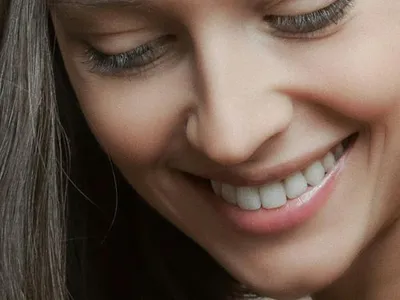 Photos you keep
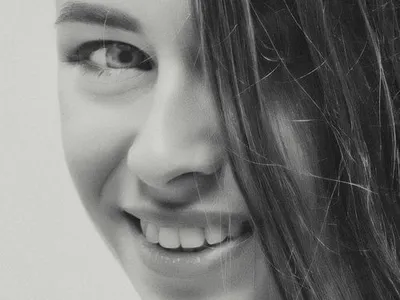 A quiet shift
Whitening isn't really about teeth. It's about the photo you didn't post. The smile you held back in the meeting. The small daily edit where you decided to laugh with your mouth half-closed because you were thinking about your front teeth instead of what was funny.
TouchWhite is a laser-supported way of doing in-chair whitening. A whitening gel is applied to your teeth, and the Fotona LightWalker's Nd:YAG laser supports the bleaching chemistry through short, controlled pulses. Many patients describe the session as calmer than a traditional LED whitening light — particularly those who've had sensitivity from previous whitening attempts.
What it won't do: change the colour of any veneers, crowns or fillings you already have. What it can do, for the right candidate, is shift your natural tooth shade enough that you stop noticing it. Which is when whitening has actually done its job.
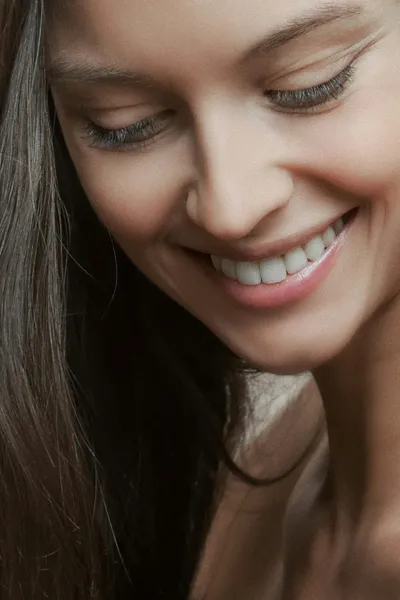
If any of these are landing — let's have the conversation. The assessment is the place where we work out whether whitening will actually solve what you came in for, and which protocol suits you.
Wedding party, work headshot, the holiday album that's still sitting on your phone six months later. You liked everything about the photo — except how your teeth read in it.
You like what you like, and you're not planning to give it up. But twenty years of it has settled into the enamel and brushing isn't shifting it.
You've tried the strips, the trays, the influencer brand. There was a small shift, then nothing. You want something professionally supervised this time.
The last in-chair session left you wincing at cold drinks for a week. You'd like a whitening option designed with sensitivity in mind — and the laser-supported protocol is one of the reasons patients ask for TouchWhite.
A wedding, a reunion, a milestone birthday, a job interview. You've been meaning to sort it out — and there's now a date on the calendar.
You're considering veneers, bonding or a smile makeover — whitening usually comes first, so the new work can be matched to your fresh shade, not your old one.
In-chair whitening is a chemical process. The laser doesn't bleach your teeth — the gel does. What the Nd:YAG wavelength does is support the chemistry of the gel, more selectively and with less collateral heat than a high-intensity lamp.
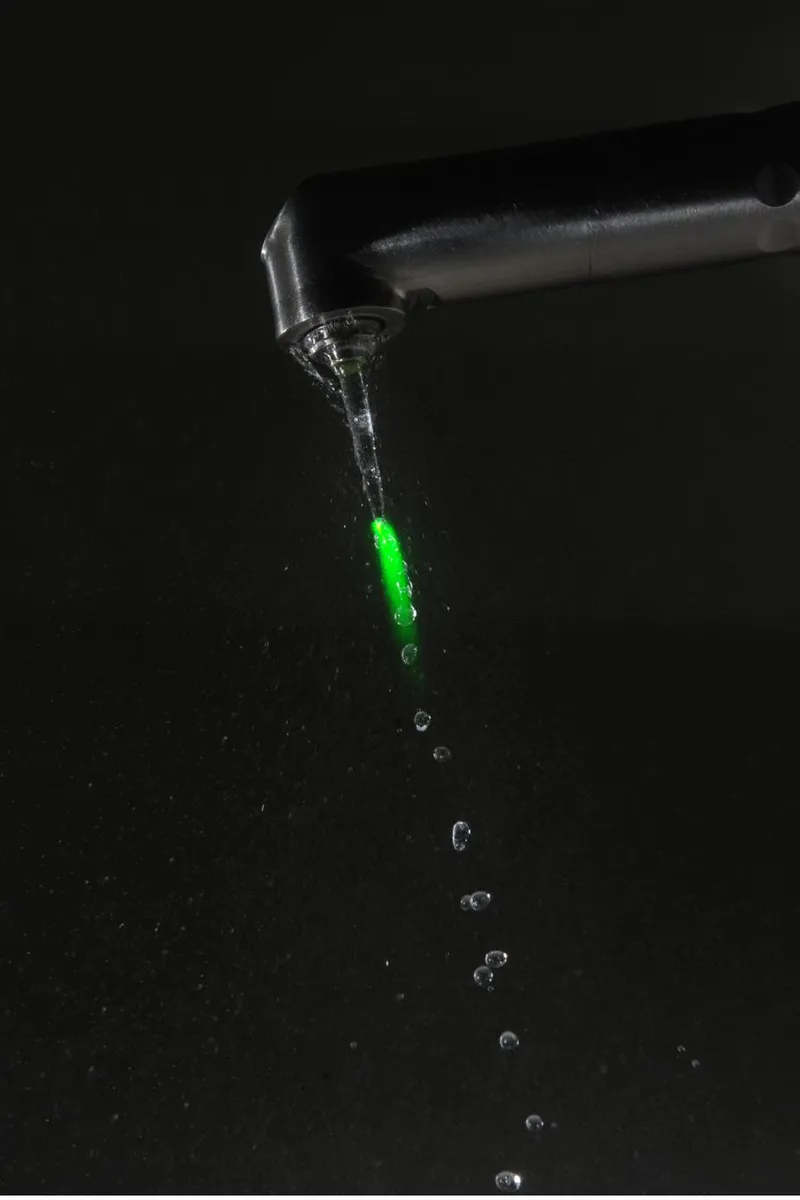 Nd:YAG · 1064 nm
A peroxide-based whitening gel is applied to your front teeth after the gums are carefully isolated. The active oxygen in the gel breaks down the long-chain colour molecules trapped in your enamel — those are the ones that have settled in from coffee, tea, wine, age and habit.
The Fotona LightWalker's Nd:YAG laser delivers short, controlled pulses at 1064nm. The wavelength is well-tolerated by the tooth and supports the gel's chemistry — accelerating the breakdown of staining molecules without the broad heating you'd get from a high-intensity lamp.
One of the most common complaints with traditional in-chair whitening is post-treatment sensitivity — sharp pangs to cold or sweet for a day or two. Because laser activation is more selective, many TouchWhite patients describe the session and the hours afterwards as calmer. Individual experiences vary; sensitivity is not eliminated.
Rather than one continuous activation, the protocol uses several shorter laser passes with gel refreshed in between. This is what keeps energy doses small and lets us check your shade and comfort progressively, rather than committing to one long session and finding out at the end.
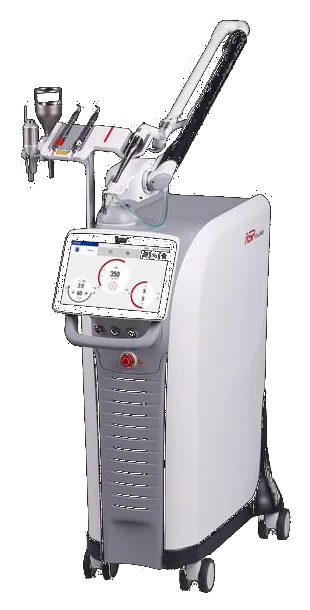 Fotona LightWalker II
The Fotona LightWalker is a dual-wavelength dental laser. Most of our laser dentistry uses both wavelengths in combination — but for TouchWhite whitening, we use the Nd:YAG side. It's the wavelength that passes well through the tooth and is best matched to supporting the bleaching gel chemistry.
The laser is operated by a laser-trained dentist on a TGA-registered medical device. Throughout the session, the touchscreen displays power, pulse duration and frequency, all calibrated to the published TouchWhite protocol. Eye protection is provided — laser-rated glasses for you, the dentist and the assistant.
We chose the LightWalker because it's the most published platform for laser dentistry protocols in the peer-reviewed literature — including whitening.
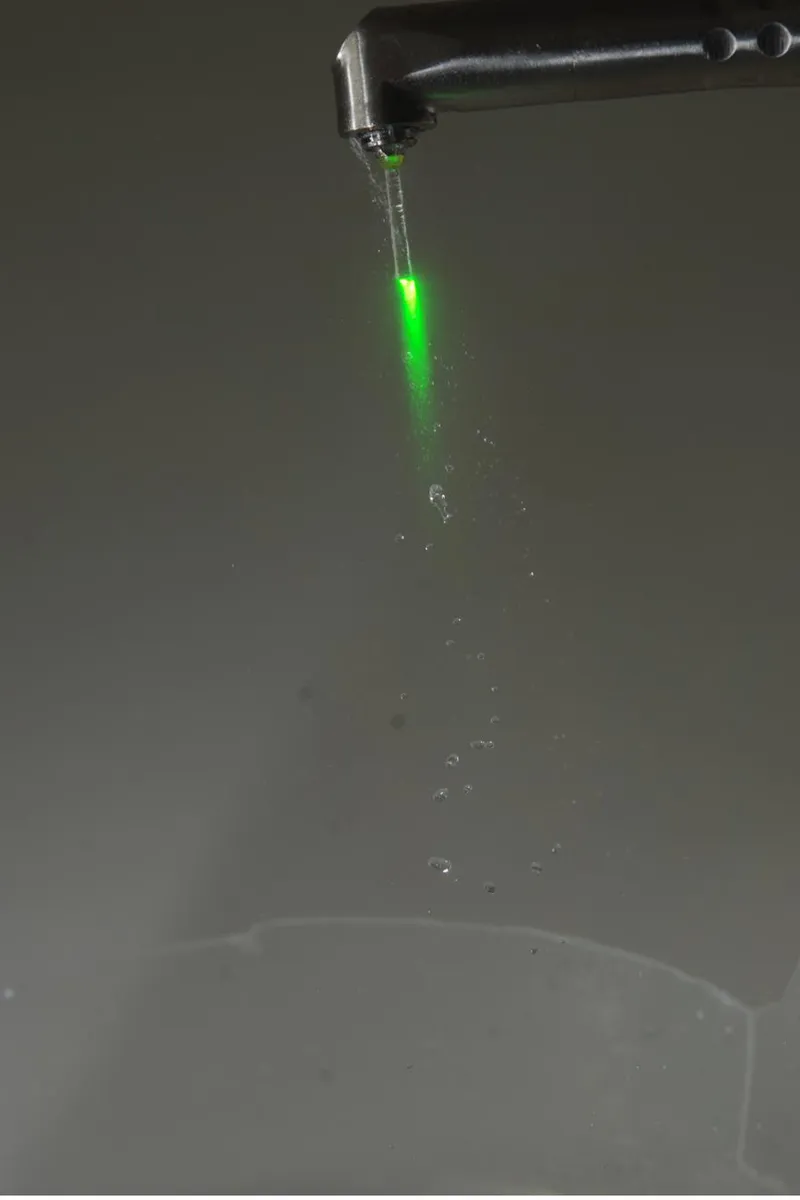
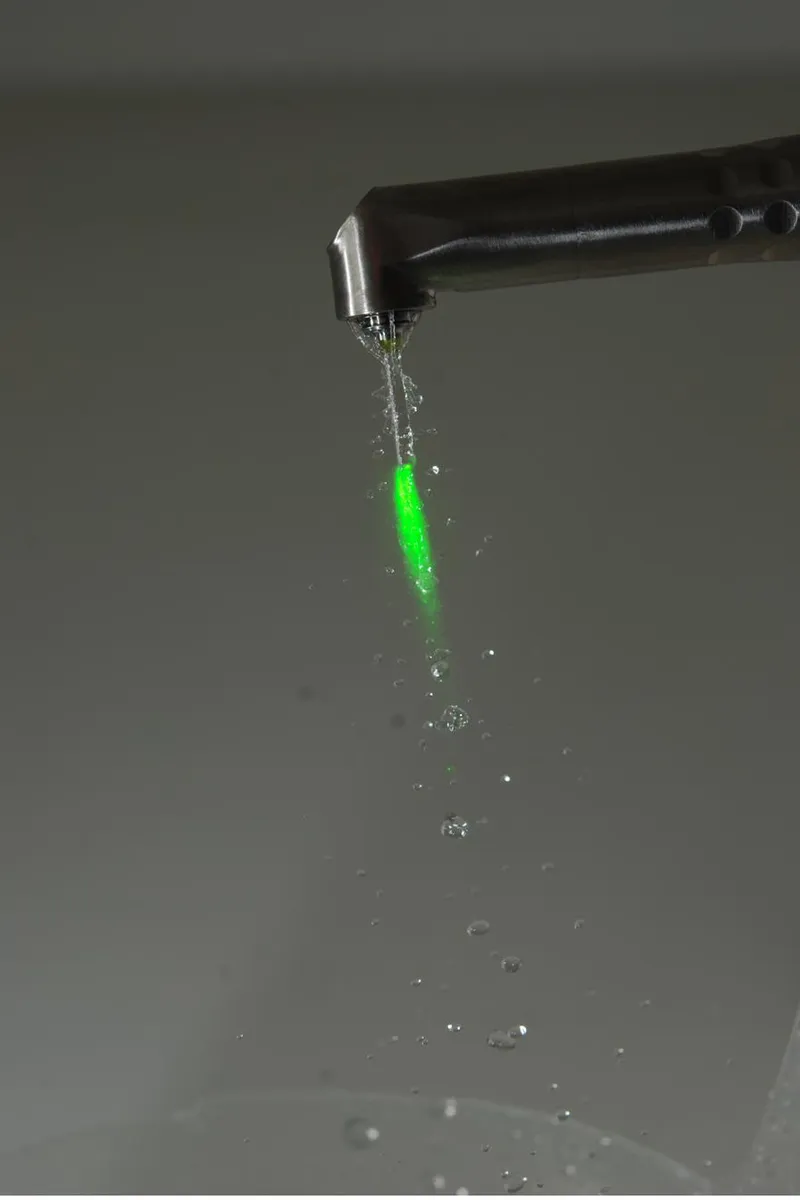
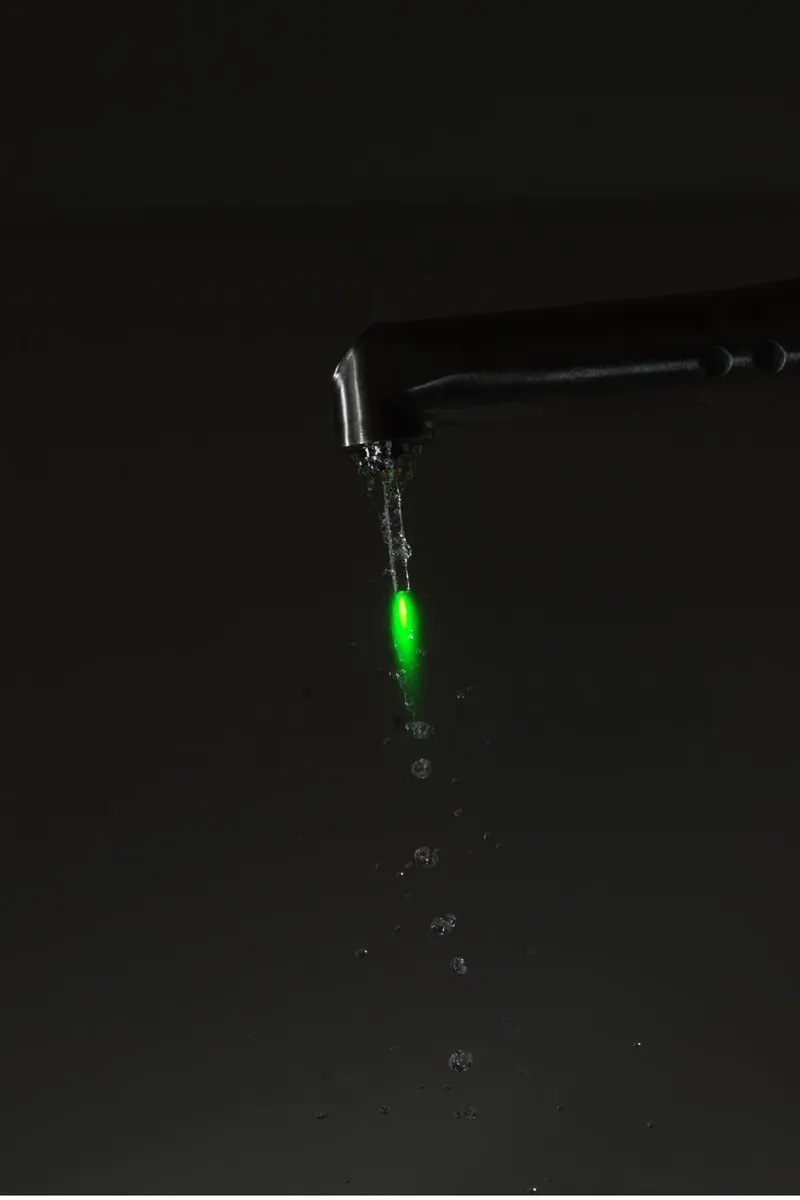
Most of the session is preparation, isolation and shade checking. The actual laser activation is shorter than people often expect.
We check your gum health, look for untreated decay, and identify the source of your discolouration. Whitening only suits some causes — we'll be honest about that.
Surface stains, plaque and tartar are removed at a separate appointment. The gel works on enamel — not on what's sitting on top of it.
We record your starting shade with a calibrated guide and clinical photos. This is what we compare against at the end and at follow-ups.
A flexible gingival barrier protects your gums. Cheek retractors keep your lips comfortable. Laser-rated glasses for everyone in the room.
Whitening gel is applied to your front teeth. Three or four laser passes follow, with the gel refreshed between each. We check in with you throughout.
A desensitising agent is applied at the end of the session as standard, designed to settle any post-treatment sensitivity before you leave.
The gel is removed, your teeth are rinsed, and we record the new shade against the same calibrated guide. You see the change side by side.
We talk through the next 48 hours — what to eat, what to avoid, sensitivity expectations — and book your review where useful.
There's no single best whitening method — only the one that suits the specific patient and starting point. The table below is what we usually walk through at the consult.
We've never wanted whitening to feel like a sales pitch. The version of this conversation we like best is the one where the patient leaves with realistic expectations and a quieter relationship with their smile.
TouchWhite is one of Fotona's documented protocols. The Fotona LightWalker is the most published dental laser platform internationally.
We show you what is and isn't likely to shift, and what your teeth will look like next to any existing veneers or crowns. No outcome promises.
The protocol uses laser-supported activation and a desensitising step at the end. We discuss your sensitivity history before booking, not after.
The session isn't squeezed between two cleans. There's time to apply the gel carefully, do laser passes properly and check shade thoughtfully.
Before, during and after — recorded against the same shade guide and the same lighting, so the change you see at the end isn't a feeling, it's measurable.
Whitening is often the first step. If you're thinking about veneers, bonding or a smile makeover, this becomes the baseline shade we plan around.
If your question isn't here, the consultation is the place for it. There's no obligation — we'll explain what's involved and what's realistic for your case.
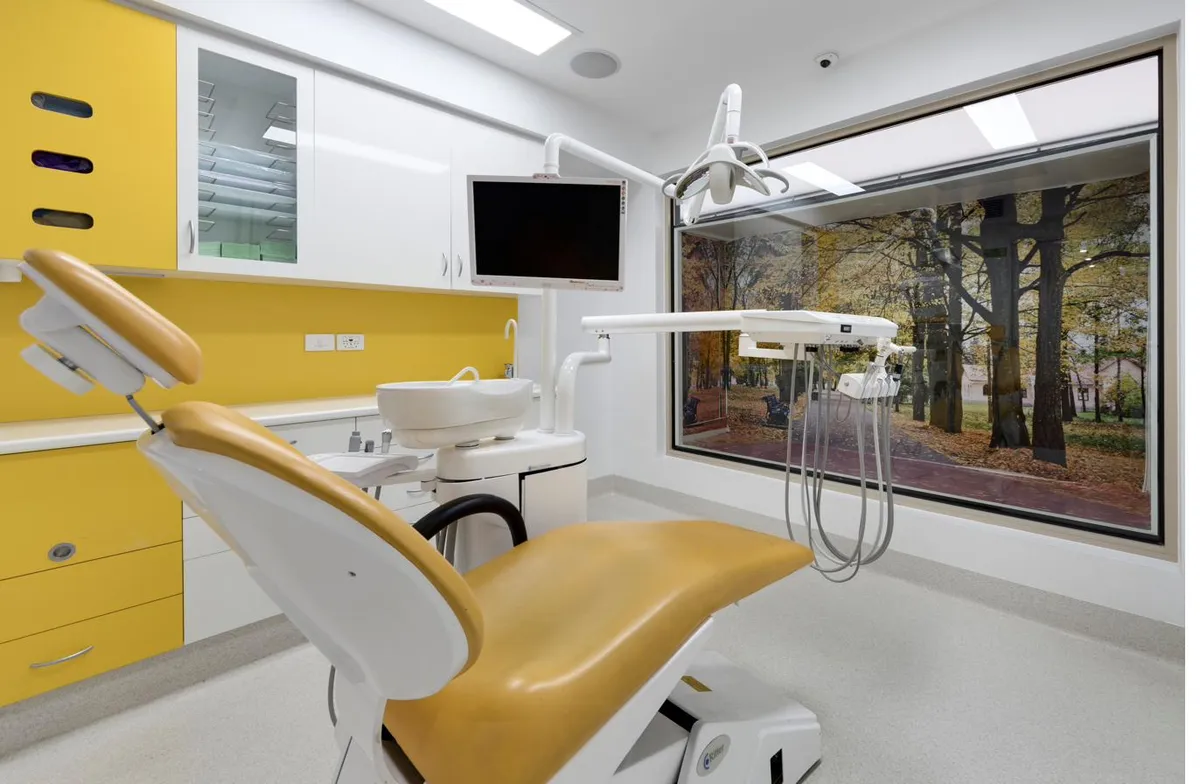
TouchWhite is Fotona's in-chair tooth whitening protocol. A peroxide-based bleaching gel is applied to your teeth and the Nd:YAG laser is used to support the whitening chemistry. The session runs in the chair under direct supervision of a laser-trained dentist.
Most in-chair systems use a high-intensity LED or halogen lamp to activate the gel across all your front teeth at once. Laser whitening focuses energy more selectively, supporting the gel chemistry while keeping the surrounding soft tissues largely out of the path.
For some patients — particularly those with previous sensitivity from in-chair whitening — this translates into a calmer session and less post-treatment sensitivity. Individual experiences vary.
It is best suited to extrinsic and mild-to-moderate intrinsic discolouration — staining from food, drinks, smoking and natural age-related yellowing of the enamel.
It won't shift the colour of fillings, veneers, crowns or bonded work — those don't whiten. It also doesn't reliably address staining from tetracycline antibiotics, severe fluorosis, dead nerves, or post-trauma discolouration. We'll assess what's causing your discolouration before booking and explain whether whitening is the right approach for your case.
Some people experience temporary sensitivity to cold or sweet things in the first 24–48 hours after any whitening session. Laser whitening is designed to keep this milder than traditional in-chair whitening, but it can still occur.
We will discuss your sensitivity history before booking. A desensitising agent is applied at the end of the session as standard, and we'll talk through what to do at home if any sensitivity appears.
Plan for around 75–90 minutes. The actual in-chair laser activation is typically 20–30 minutes; the rest of the appointment is preparation, isolation, shade recording, gel application in stages, post-treatment desensitising and aftercare advice.
Whitening is not permanent. Results depend on what you eat and drink, whether you smoke, your home maintenance routine and your underlying tooth shade.
Many patients see noticeable change for one to three years before considering a maintenance top-up. We will discuss realistic expectations for your specific case at the consultation.
The Fotona LightWalker is a TGA-registered dental laser and TouchWhite is one of its established protocols, used by laser-trained dentists internationally.
Whitening is suitable for most healthy adult teeth, but is not appropriate during pregnancy or breastfeeding, for children, or for teeth with active decay or untreated gum disease. We always assess your full oral health before recommending whitening.
Whitening is often the first step in a longer cosmetic plan, so any veneers, crowns or bonding placed afterwards can be matched to your new tooth colour rather than your old one.
If you already have veneers or crowns, they will not change shade with whitening — only your natural teeth will. Your dentist will explain how that affects your case and whether any existing work might look out of place against whitened natural teeth.
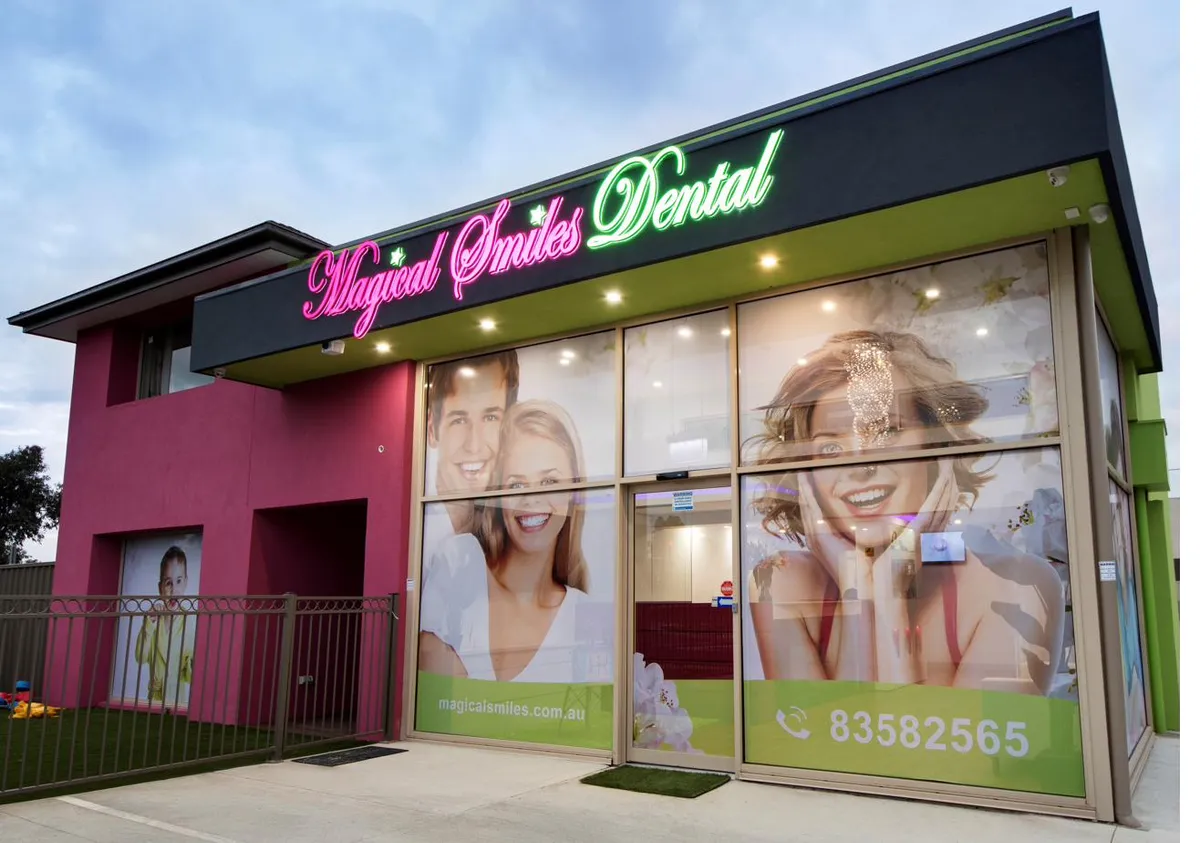
Yes — TouchWhite laser whitening is available across all three Magical Smiles clinics: Caroline Springs, Bacchus Marsh and Point Cook. Tell us the clinic that suits you best when you call and we’ll book the session and walk you through the day before you come in.
Pricing varies depending on your starting shade, the protocol used, and whether home maintenance trays are included. We provide a written quote at your consultation, explain what is and isn't covered by your health fund, and discuss payment plan options if helpful. No surprises.
TouchWhite laser whitening is offered across all three Magical Smiles clinics — Caroline Springs, Bacchus Marsh and Point Cook. Whichever feels closest to home or work, our team will help arrange a time that suits.
Burnside · Taylors Hill · Caroline Springs
Maddingley · Darley
Wyndham · Sanctuary Lakes
The Fotona LightWalker is used across a range of treatments — each tuned to a different tissue and a different goal.
If whitening is something you've been quietly thinking about for years, this is the conversation to start. We'll assess what your discolouration is actually from, explain what whitening can and can't shift, and you decide where to go from there. No pressure either way.
Information on this page is general in nature and not a substitute for an individual clinical assessment. Whitening outcomes vary depending on your starting shade, the cause of discolouration and individual response — results cannot be guaranteed. Sensitivity can occur and is usually temporary. Whitening is not suitable during pregnancy or breastfeeding, for children, or for teeth with active decay or untreated gum disease. The Fotona LightWalker is a TGA-registered medical device used by laser-trained general dentists at our clinics. TouchWhite® is a registered protocol of Fotona d.o.o. Laser dentistry services are based at our Caroline Springs and Bacchus Marsh clinics; appointments for Point Cook patients are coordinated through our team. Any cosmetic procedure carries risks. Before proceeding, please seek a second opinion from an appropriately qualified health practitioner.