
An implant is for the long run — and so is looking after it.
An implant doesn't get decay the way a natural tooth can, but the gum and bone around it still need looking after. Peri-implantitis — inflammation around an implant — is usually picked up early at routine review appointments, well before it becomes noticeable day to day. Here's what it is, and how it's managed if it's ever found.
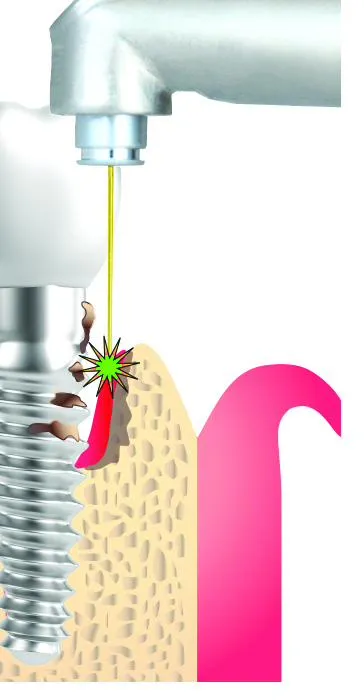
Caught early at a routine review, most of the time
What is peri-implantitis?
Peri-implantitis is inflammation or infection in the gum and bone around an existing dental implant — similar in principle to gum disease around a natural tooth. It's usually picked up through regular review appointments and imaging, and treatment can include laser-assisted decontamination of the implant surface.
An implant doesn't get decay the way a natural tooth can, but the gum and bone around it can still become inflamed. It's usually picked up early at routine review appointments, well before it becomes noticeable day to day — which is exactly why those reviews matter.
If it is found, treatment can include laser-assisted decontamination of the implant surface, alongside a review of your home care and bite. We offer dedicated peri-implantitis management across all three clinics.
Every implant is checked individually.
However many implants you have, each one is reviewed on its own at your check-ups — inflammation around one doesn't mean the others are affected.
A single implant
- —Regular reviews check the implant is settled and comfortable.
- —Early signs of peri-implantitis are usually caught well before they're noticeable day to day.
- —Home care and bite are reviewed alongside the implant itself.
Several implants or an implant bridge
- —Each implant is checked individually — one can be affected without the others being involved.
- —An implant-supported bridge is checked at each supporting implant along the connected span.
- —Anything found is managed on that implant alone, where appropriate.
A full-arch prosthetic
- —A fixed arch or overdenture relies on every supporting implant working together.
- —Cleaning underneath a fixed prosthetic is different from cleaning natural teeth — we'll show you how.
- —Each supporting implant is checked at every review.
With good home care and regular review appointments, implants can function for many years — though this varies between individuals depending on bone health, gum care and general health factors.
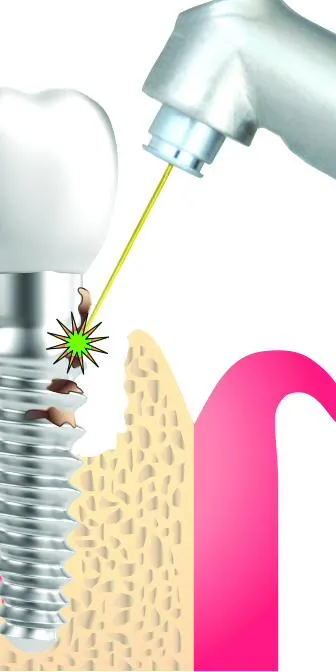
Each implant checked on its own, at every review
How peri-implantitis is managed.
If peri-implantitis is found on any implant, treatment can include laser-assisted decontamination of the affected surface, alongside a review of your home care and bite. The aim is always to address it early, while it's still a small thing.
We offer dedicated laser-assisted peri-implantitis treatment across all three clinics — read the full peri-implantitis laser page for the detail →
Which approach suits your situation is confirmed at a review appointment. Outcomes and timelines vary between individuals.
Looking after an implant, day to day.
Most of implant aftercare is quiet, everyday habit — the same calm routine we'd recommend around natural teeth, with a few implant-specific points.
Clean around the implant daily
Brush and clean between teeth as you would around natural teeth. Around a fixed arch or bridge, we'll show you the specific techniques for cleaning underneath the prosthetic.
Keep your review appointments
Regular reviews let us catch early signs of peri-implantitis before they progress — early is almost always simpler to manage.
Mention changes early
Bleeding, tenderness or a change in how the implant feels is worth a call rather than a wait-and-see — small things are easier to address early.
General guidance only — your dentist will tailor home-care advice to your implant, your prosthetic and your gums at your review.
What reviews and care cost.
Routine reviews are part of normal ongoing care, and any treatment for peri-implantitis is always quoted in writing before it begins — you'll know the exact cost once we've assessed the implant involved. We work with payment options that spread cost across smaller, regular amounts if they're ever needed.
Repayment figures from the estimator are illustrative, calculated using Humm/NDP's own plan-fee formula for the term selected, so Humm's fees are already included; finance is subject to Humm's own eligibility criteria and approval, which may not be granted.
Curious what a treatment plan might cost week to week? Open the repayment estimator → →
Estimate only — not a quote or credit approval. Your actual cost is confirmed at consultation.
We accept






The things people usually ask.
Let's keep it healthy for the long run.
Whether it's time for a routine review or something's caught your attention, a short appointment is usually enough to know where things stand — and what, if anything, needs doing next.
Peri-implantitis care is part of the dental implants pathway — the full-arch All-on-X implant dentures page and the bone grafting preparation step cover the related parts of the plan.