
When your gums need more than a routine clean.
A deep clean — also called scaling and root planing — is a non-surgical treatment for early to moderate gum disease. It cleans below the gumline, along the tooth roots, helping inflamed tissue heal and pockets shrink. It's usually completed over two appointments, with local anaesthetic to keep you comfortable.
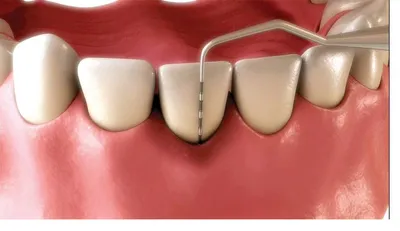
The routine screen — pocket depth measured at six points per tooth tells us whether a deep clean is needed.
What is a deep clean?
A deep clean is a periodontal treatment that removes plaque, tartar and bacterial deposits from below the gumline — the places a routine clean and your toothbrush can't reach. The root surfaces are then smoothed, so the gum tissue can heal and reattach more easily.
Deep cleaning is part of our general dentistry services.
When gum pockets have deepened and inflammation has set in, a routine clean is no longer enough. Also known as scaling and root planing (SRP), this is the standard non-surgical treatment for gingivitis and early-to-moderate periodontitis. We numb the area with local anaesthetic, then carefully clean the root surfaces — smoothing the root so gum tissue can heal and reattach.
A clinical assessment and periodontal charting is always required before a deep clean is recommended. Outcomes vary depending on the severity of gum disease and home care, and we'll talk through what's realistic for your gums before anything is booked.
What are the signs your gums need more than a routine clean?
Gum disease is one of the most common chronic inflammatory conditions in Australia — and most treatable when caught early. A few of these might sound familiar.
Bleeding when you brush or floss
Healthy gums don't bleed easily. Regular bleeding — even a little, most days — is one of the earliest signs of gingivitis, and the one most people ignore the longest.
Puffy, tender or receding gums
Gums that look swollen, feel sore to touch, or seem to be pulling back from the teeth are worth having measured. Recession can quietly expose the root surface over time.
Persistent bad breath or a bad taste
The bacteria that sit in deepened gum pockets produce odour that brushing and mouthwash can't shift for long — because the source is below the gumline.
A hygienist has mentioned 'pockets' before
If a past visit noted pocket depths of 4mm or more, or you've been told you have early periodontitis, a deep clean is usually the first treatment step discussed.
Only a periodontal charting — measuring the pocket depth around each tooth — can confirm whether a deep clean is the right call. That's part of every check-up at Magical Smiles.
What happens at a deep cleaning appointment?
Most cases are completed across two appointments, treating one side of the mouth per visit. Each visit usually takes 60 to 90 minutes. Here's the shape of it.
Assessment & charting first
Before anything is recommended, we measure the pocket depth around every tooth and look at your X-rays. You'll see what we see, and hear plainly whether a deep clean is genuinely needed.
Numbing for comfort
The area being treated is numbed with local anaesthetic, so the procedure stays comfortable throughout. If you're nervous about that step, tell us — comfort options, including The Wand, can be part of the plan.
Scaling below the gumline
Using ultrasonic and hand instruments, we carefully remove plaque, tartar and bacterial deposits from the root surfaces beneath the gum — the source of the inflammation.
Root planing
The cleaned root surfaces are smoothed, which discourages future bacterial re-attachment and gives the gum tissue its best chance to heal and reattach.
Review at six to eight weeks
Once healing has had time to happen, we re-measure your pockets to confirm the change and plan your maintenance recall — usually every three to four months to keep things stable.
You may notice some sensitivity for a few days afterwards — that's normal and settles. We'll send you home with clear aftercare instructions and a direct line to the clinic.
How is a deep clean different from a routine clean?
A routine scale and clean maintains healthy gums — it clears plaque, tartar and surface stain from the visible parts of your teeth and just below the gumline, and it's what most adults need every six months. A deep clean is treatment, not maintenance: it's recommended only when gum pockets have deepened, and it works further below the gumline, along the roots, usually across two numbed appointments.
For some patients with diagnosed periodontal disease, there are further options beyond a deep clean — including Laser-Assisted Periodontal Therapy (LAPT) with the Fotona LightWalker, and gentler maintenance cleans like Airflow Guided Biofilm Therapy once things are stable. We'll explain what applies to you, and in what order, at your assessment.
If you're not sure which situation you're in, a check-up and clean is the right place to start — the periodontal screening is built into every one.
Deep cleaning, answered plainly.
Let's have a calm look at your gums.
A periodontal charting tells us — and you — exactly where things stand. Book an assessment at Caroline Springs, or call and we'll talk it through first.