✦ Now welcoming new patients  ·  Same-day emergency appointments where possible  ·  Afterpay, SuperCare & all major health fundsCaroline Springs · (03) 8358 2565
Dual-Wavelength Periodontal Care

TwinLight®
Periodontal Therapy

If you’ve been told to “keep an eye on” the same patch of gum more than once — and you’ve been quietly putting off doing anything about it — this page is written for you. TwinLight is a minimally invasive, dual-wavelength laser protocol we use to help manage periodontal disease, in suitable cases, without the urgency or theatre that often surrounds gum treatment.

Technology
Fotona LightWalker®
Wavelengths
Nd:YAG · Er:YAG
Used for
Periodontal pocket therapy
Available at
All 3 Melbourne clinics
A quieter way to start

When was the last time someone actually explained what was happening below the gumline?

Periodontal disease is one of the most common reasons people put dental visits off. Not because they don’t care — but because the conversation usually arrives suddenly, with a number (“four millimetres here, six there”), and a recommendation that feels heavier than the moment they walked in for.

TwinLight® Periodontal Therapy is, more than anything, a different conversation. It is a structured, minimally invasive option for managing periodontal disease using two wavelengths of laser light, in sequence, inside the same appointment. We use it where it suits the situation. Sometimes that is the whole story. Sometimes it sits alongside hygiene therapy and follow-up reviews. Either way, you’ll understand the plan before anything begins.

You don’t need to know what an Nd:YAG or Er:YAG is to read on. We’ll explain both — calmly, in plain English — so the next visit feels like a conversation you’re part of, not something happening to you.

What makes it “Twin”

Two wavelengths, used in sequence, doing different jobs in the same pocket.

Periodontal pockets aren’t one problem — they’re several layered together. Pigmented bacteria embedded in inflamed tissue. Hardened calculus stuck to the root surface. Soft tissue that needs to settle. A single instrument or single wavelength is rarely the right fit for all of them. TwinLight uses two — each absorbed by different tissues — so each part of the pocket is addressed by the wavelength best suited to it.

Wavelength 1 · Soft tissue & bacteria

Nd:YAG®

1064 nm · Near-infrared · Deep penetration
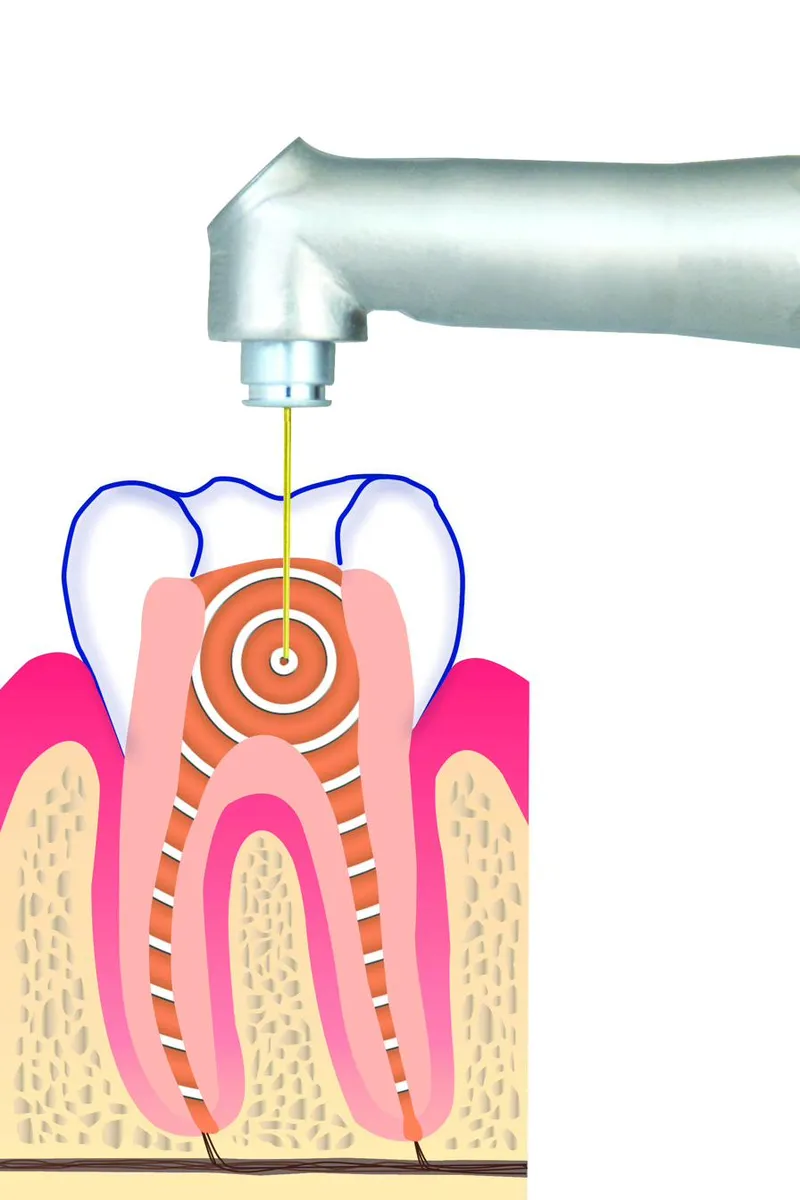
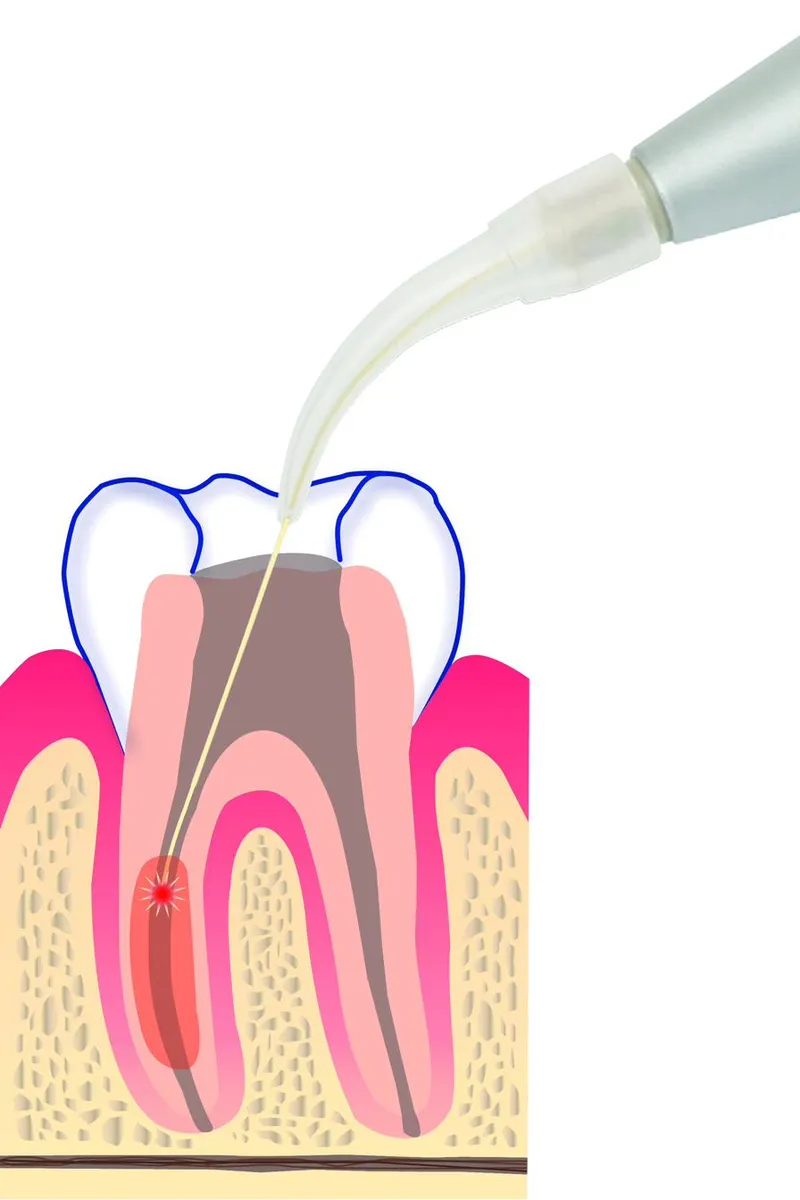
Cross-section illustration of an Nd:YAG laser fibre delivering 1064 nm energy beneath the gumline into a periodontal pocket.

The Nd:YAG wavelength is absorbed strongly by pigments — particularly the pigments found in periodontal pathogens and inflamed tissue. It passes through healthy tissue with relatively little effect and concentrates its energy where the disease lives. This is the wavelength that does most of the decontamination work and helps with the final stabilisation pass.

  • Targets pigmented periodontal bacteria selectively
  • Reaches deep into the periodontal pocket
  • Helps with haemostasis (reduced bleeding) during treatment
  • Used at the start and end of the TwinLight sequence
Wavelength 2 · Calculus & root surface

Er:YAG®

2940 nm · Mid-infrared · Strongly absorbed by water
Cross-section illustration of an Er:YAG laser delivering 2940 nm energy to a tooth, showing how the wavelength interacts with hydrated tissue.

The Er:YAG wavelength is absorbed by the water content in hard tissue — making it well suited to addressing calculus deposits and preparing the root surface within a periodontal pocket. It interacts with very thin layers of tissue at a time, which gives the clinician precise control over what is and isn’t treated.

  • Used for calculus removal and root surface preparation
  • Highly precise — works in micro-layers
  • Used in the middle stage of the TwinLight sequence
  • Pairs naturally with the Nd:YAG passes either side of it

Why this matters in plain English. Most laser systems offer one wavelength — and so the clinician has to choose which part of the pocket to prioritise. TwinLight removes that compromise. The same Fotona LightWalker® unit delivers both wavelengths through compatible handpieces, so the protocol moves smoothly between them inside a single appointment.

The TwinLight Sequence

A three-pass protocol, all in one appointment.

The TwinLight protocol is performed in a specific sequence — Nd:YAG, then Er:YAG, then Nd:YAG again. Each pass has a defined purpose. Your clinician will walk you through each step in the room, and pause whenever you want to ask a question.

Pass 01
Nd:YAG · 1064 nm

Decontamination & bacterial reduction

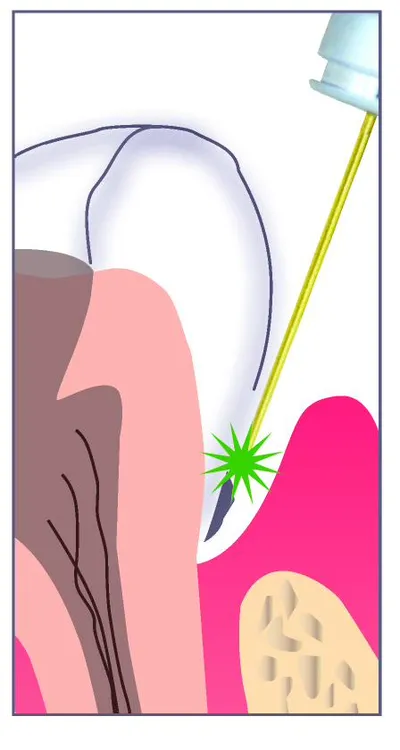
Illustration of the first TwinLight pass — Nd:YAG laser energy delivered into a periodontal pocket to address pigmented bacteria and inflamed tissue.

A thin fibre is introduced into the pocket. The Nd:YAG wavelength is selectively absorbed by pigmented bacteria and inflamed tissue, beginning the decontamination of the pocket and reducing bleeding throughout the rest of the visit.

Pass 02
Er:YAG · 2940 nm

Calculus removal & root preparation

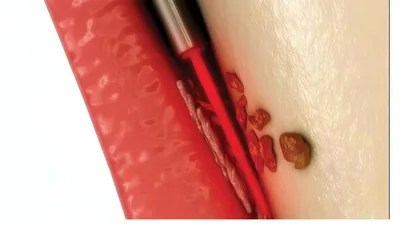
Illustration of the second TwinLight pass — Er:YAG laser energy used to remove calculus and prepare the root surface inside the periodontal pocket.

The Er:YAG handpiece addresses calculus on the root surface within the pocket. Because the wavelength is absorbed by water, it works in very thin layers, giving the clinician fine control. Ultrasonic and hand instruments may also be used to supplement this stage where helpful.

Pass 03
Nd:YAG · 1064 nm

Final pass & pocket stabilisation

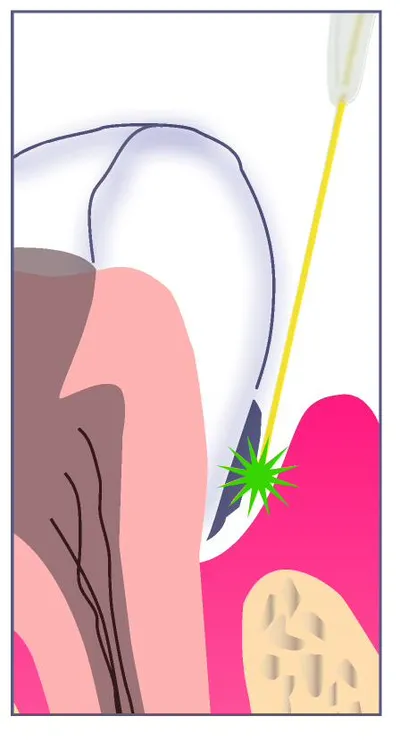
Illustration of the third TwinLight pass — a final Nd:YAG pass through the periodontal pocket to support stabilisation.

A final Nd:YAG pass closes out the protocol. This pass supports haemostasis and contributes to the formation of a stable clot inside the pocket — an important part of the healing environment in the days that follow.

Why dual-wavelength matters

Four reasons we reach for TwinLight when it suits the situation.

01 · Match

Right wavelength for each tissue

Soft tissue, hard tissue, calculus, bacteria — each absorbs light differently. Using two wavelengths lets us match the tool to the job rather than compromise.

02 · Less

Often less swelling and bleeding

The Nd:YAG passes contribute to haemostasis during and after treatment. Many patients describe the recovery as quieter than they had expected.

03 · Conserve

Conservative by design

TwinLight works within the existing pocket. It does not require the scalpel-and-suture flap surgery used in conventional open-flap periodontal protocols.

04 · One visit

A full sequence in one sitting

Because both wavelengths are delivered from the same unit, the entire three-pass protocol can usually be completed in a single appointment per treatment area.

Understanding your options

TwinLight vs. conventional periodontal therapy.

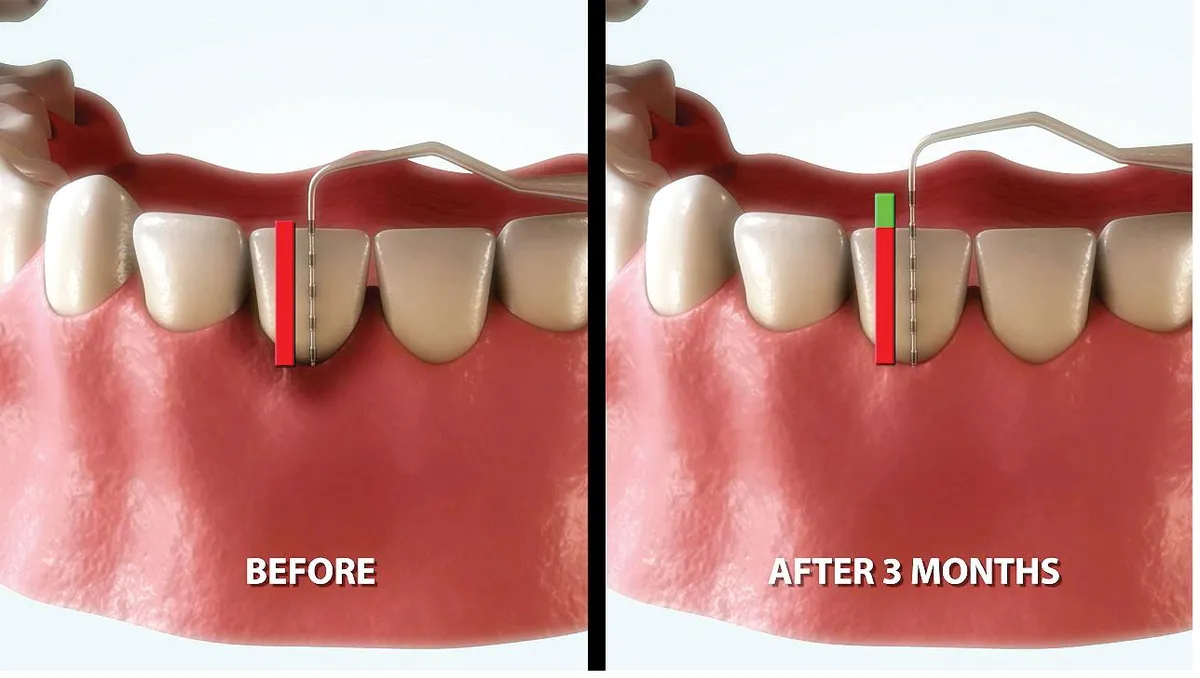
Clinical illustration showing periodontal pocket depth before treatment and after three months — for educational purposes only.
Pocket-depth measurement — clinical illustration. The red bar represents the pre-treatment probing depth; the shorter red bar in the second image represents the depth at the three-month review, with the green segment showing the reduction. This is a stylised clinical illustration, not a patient case study. Individual outcomes vary. Results cannot be guaranteed.
Aspect
TwinLight® Therapy
Traditional flap surgery
Access to pocket
Within the existing pocket using a thin fibre
Surgical flap raised to expose the root surface
Sutures
Generally not required
Sutures typically placed at closure
Bleeding during treatment
Reduced — Nd:YAG supports haemostasis
More pronounced during open-flap access
Recovery descriptions
Most patients describe a quieter recovery than expected
More post-operative care and a longer settling period
Visits per treated area
Usually one session per area, then review
Surgical session plus suture removal and reviews
Suitability
Determined by clinical assessment — not every case is appropriate
Indicated for cases where TwinLight is not appropriate
What to Expect

From your first phone call to your six-month review.

One of the most common things we hear is, “I just didn’t know what I was walking into.” Below is the actual sequence — not a sales journey, just what the next few months tend to look like.

If you’re reading this and recognising the part where the same pocket has been flagged twice already, you’re not alone. We see that quite often. Most people are relieved to find the next step is calmer than they expected.

Stage 01 · Before the visit

A conversation, then a plan

Your consult starts with a periodontal assessment — full pocket charting, X-rays where appropriate, and a review of any prior notes. We explain what we see, in plain English. Nothing is booked in for treatment until you understand the plan and feel ready.

Stage 02 · The TwinLight visit

Local anaesthetic, then the three-pass protocol

The treatment area is numbed where appropriate. A thin laser fibre is used inside the pocket, followed by the Er:YAG handpiece, followed by a final Nd:YAG pass. We pause whenever you want to. Most patients describe the visit as easier than they had braced for.

Stage 03 · The first week

Quieter than expected, usually

You’ll get written aftercare. Most patients return to normal activities the same day. We avoid prescribing what isn’t needed, and we are direct about what is. If anything feels off, we want to hear from you — that’s what the clinic phone is for.

Stage 04 · Reviews & maintenance

Measure, then measure again

We re-chart the treated areas at review appointments — typically at six weeks and three months — to see how the tissues have responded. Maintenance hygiene appointments are planned around the result, not the calendar. Periodontal health is something we manage long-term, together.

Is TwinLight suitable for you?

This page can help you decide whether to start the conversation.

Whether TwinLight is the right protocol for your case is a clinical decision — based on probing depths, bone levels, your medical history, and the type and stage of periodontal disease present. The list opposite is here to help you self-select into a consult, not to pre-diagnose. We’ll do that part properly when we meet.

This page may be for you if

  • You’ve been told you have moderate periodontal pockets and a “deep clean” has been mentioned more than once.
  • Your gums bleed when you brush or floss, and have done for longer than a few weeks.
  • You’ve had previous periodontal treatment and would like a more conservative option to consider for the next round.
  • You’ve been hesitant about scalpel-and-suture periodontal surgery and want to understand the laser alternative.
  • You generally avoid the dentist when something feels uncertain — and want to read before you call.

This page probably isn’t for you if

  • You are looking for a cosmetic gum treatment — TwinLight is a periodontal protocol, not a cosmetic one.
  • You haven’t had a recent dental check-up and want to start there first. (We can help with that too.)
  • You’re looking for a same-day fix without an assessment. Periodontal care begins with a proper diagnosis.

A note on terminology. You may have searched for “LANAP” — a US-trademarked laser periodontal protocol used with a specific laser system. We do not perform LANAP. TwinLight® is Fotona’s dual-wavelength periodontal protocol used with the Fotona LightWalker® system, and is the laser-based periodontal therapy we offer at Magical Smiles. The two protocols share similar goals, but they are distinct. Your consult will determine which approach — laser-based or conventional — is best suited to your case.

The Fotona LightWalker®

One unit, both wavelengths, built for this.

TwinLight is delivered on the Fotona LightWalker® — a dental laser platform engineered to switch between Nd:YAG and Er:YAG handpieces within the same procedure. It’s the same platform that supports many of our other laser-assisted treatments, which means familiarity, reliability, and a calmer room.

Wavelength 01
1064 nmNd:YAG — soft tissue & bacterial decontamination
Wavelength 02
2940 nmEr:YAG — calculus & root surface preparation
Made in
SloveniaFotona has manufactured laser systems for over 50 years.
Used for
Multiple protocolsPeriodontal, endodontic, soft-tissue and aesthetic laser dentistry.
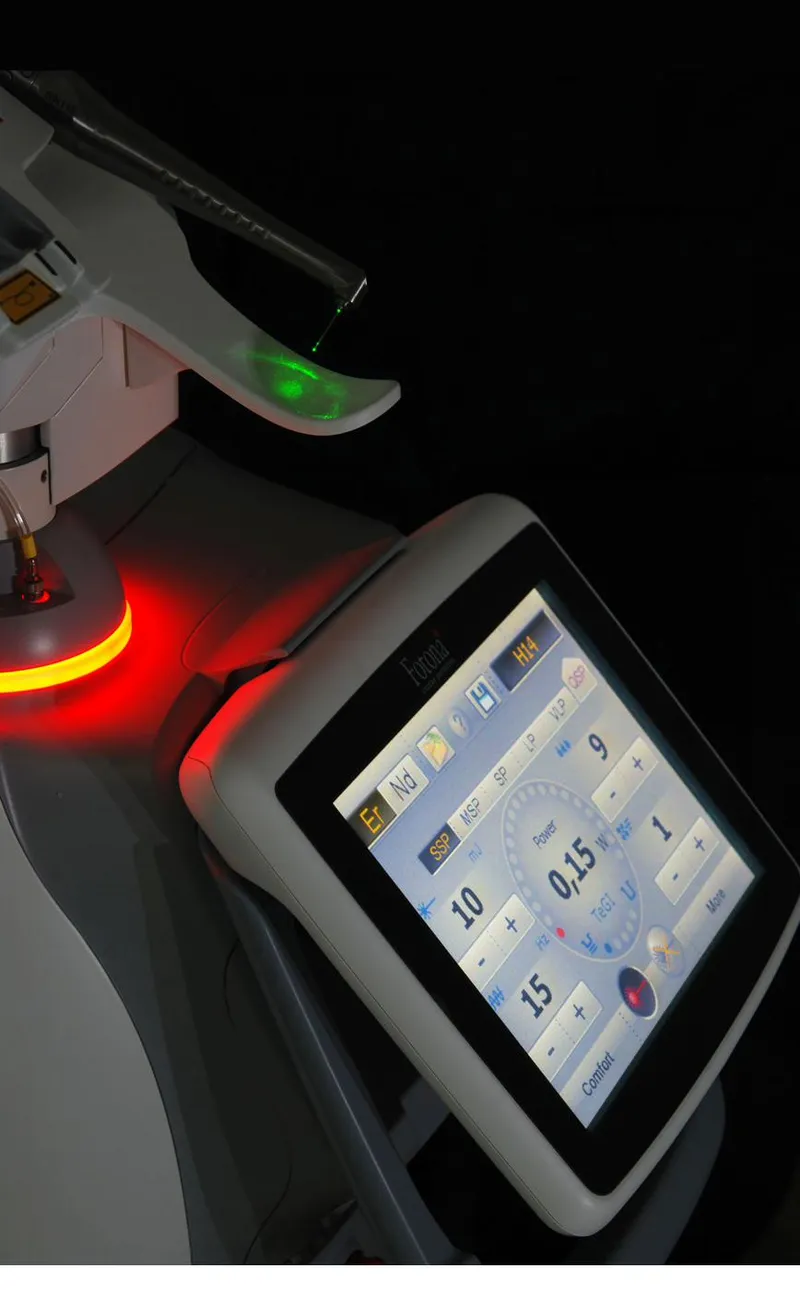
Close-up of the Fotona LightWalker® control panel showing the Er and Nd wavelength selectors and treatment parameters used during the TwinLight protocol.
Common Questions

What patients ask before booking.

TwinLight is Fotona’s dual-wavelength periodontal protocol. It uses two laser wavelengths — Nd:YAG (1064 nm) and Er:YAG (2940 nm) — delivered in a defined sequence within the same appointment, to address different aspects of a periodontal pocket. We use it as a minimally invasive option for managing periodontal disease, where suitability has been clinically established.
A scale and clean (prophylaxis) addresses deposits at and just below the gumline as part of routine preventive care. TwinLight is used when periodontal disease has progressed beneath the gumline into measurable periodontal pockets, where the issue is not just plaque but inflammation, calculus on the root surface, and active bacterial involvement. Suitability is determined by clinical assessment, not by patient request.
Different tissues absorb different wavelengths. Nd:YAG is strongly absorbed by pigmented bacteria and inflamed tissue. Er:YAG is strongly absorbed by water, which makes it well suited to calculus and root surface preparation. Using both, in sequence, allows the clinician to address multiple aspects of the pocket without compromise — rather than choosing which one to prioritise.
The protocol is designed to be gentle and comfortable. Local anaesthetic is used where appropriate, and most patients describe the visit as significantly easier than they had expected — often with less bleeding and swelling than conventional periodontal surgery. We will discuss comfort options with you before treatment begins, and we don’t rush that part.
Most patients are scheduled across one to two TwinLight sessions, followed by reviews. The exact plan depends on the severity of the periodontal disease, the number of pockets, and how your tissues respond. Your dentist will explain the proposed sequence after your assessment, and you’ll get it in writing.
Most patients return to normal activities on the same day. You’ll receive written aftercare instructions covering eating, brushing, and what to watch for. We schedule a review to recheck pocket depths and assess how the tissues have responded. Individual recoveries vary; if anything feels unusual, we want to hear from you.
They share similar goals — a laser-based approach to managing periodontal disease — but they are not the same protocol or device. LANAP is a US-trademarked protocol used with a specific laser system. TwinLight is Fotona’s dual-wavelength periodontal protocol delivered with the Fotona LightWalker®. We do not perform LANAP. A consultation will determine whether TwinLight is suitable for your case.
Magical Smiles offers TwinLight® Periodontal Therapy across three clinics in Melbourne’s west — Caroline Springs, Bacchus Marsh, and Point Cook. A consultation and clinical assessment is required to determine whether the protocol is suitable for your situation. You can call any of the clinics directly to start that conversation.
Periodontal treatment fees depend on the number of teeth and pockets involved, the stage of disease, and the overall plan agreed at your consultation. We will give you an itemised written estimate before any treatment begins, including health-fund item numbers where applicable. Payment plan options can be discussed at the clinic.
Available across Melbourne’s west

Three clinics. One protocol. One conversation.

When you’re ready

Six more months of “keeping an eye on it” — or a calmer conversation, this week?

If TwinLight is going to be the right next step for your gums, we’ll know it together — after the assessment, not before. If it isn’t, you’ll leave knowing what is. Either way, you walk out with a plan that fits the person you actually are.

TwinLight® Periodontal Therapy is offered where clinically appropriate, following full periodontal assessment. Suitability, treatment plans, and outcomes vary by individual. This page is general information only and does not constitute clinical advice. All clinicians at Magical Smiles hold current AHPRA registration with the Dental Board of Australia.