Veneers that no longer match.
The colour has shifted, the surrounding teeth have changed, or the original work was done in an era of different shade matching. You've been close-mouth smiling in photos because of it.

You've probably been putting it off. The veneers from years ago no longer match what they used to. The crown has chipped, or the colour just doesn't sit right anymore. And the part you've been dreading isn't the new smile — it's the thought of someone drilling the old work out. There's a quieter way. We use the Fotona LightWalker laser to release ceramic restorations from the underlying tooth, often without a drill ever touching the porcelain. The same platform is also used for laser gum depigmentation.
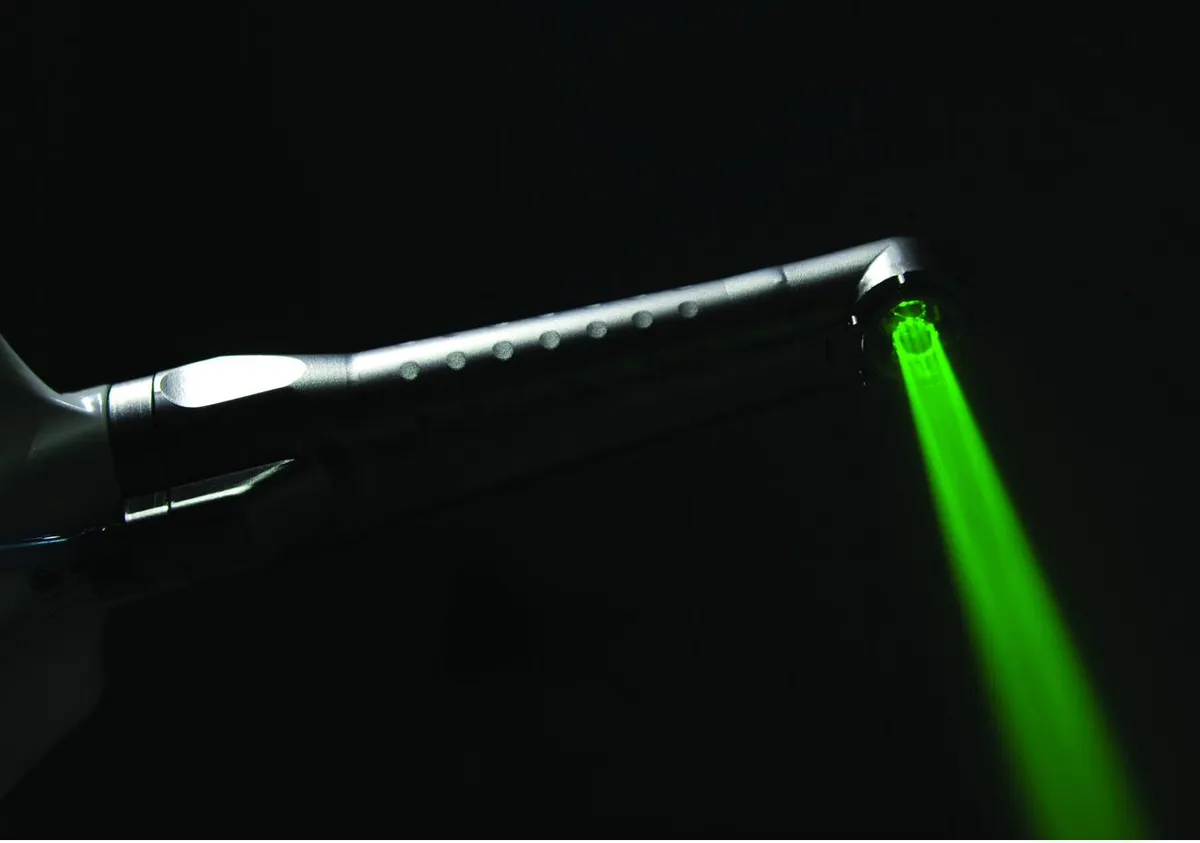 Pilot beam
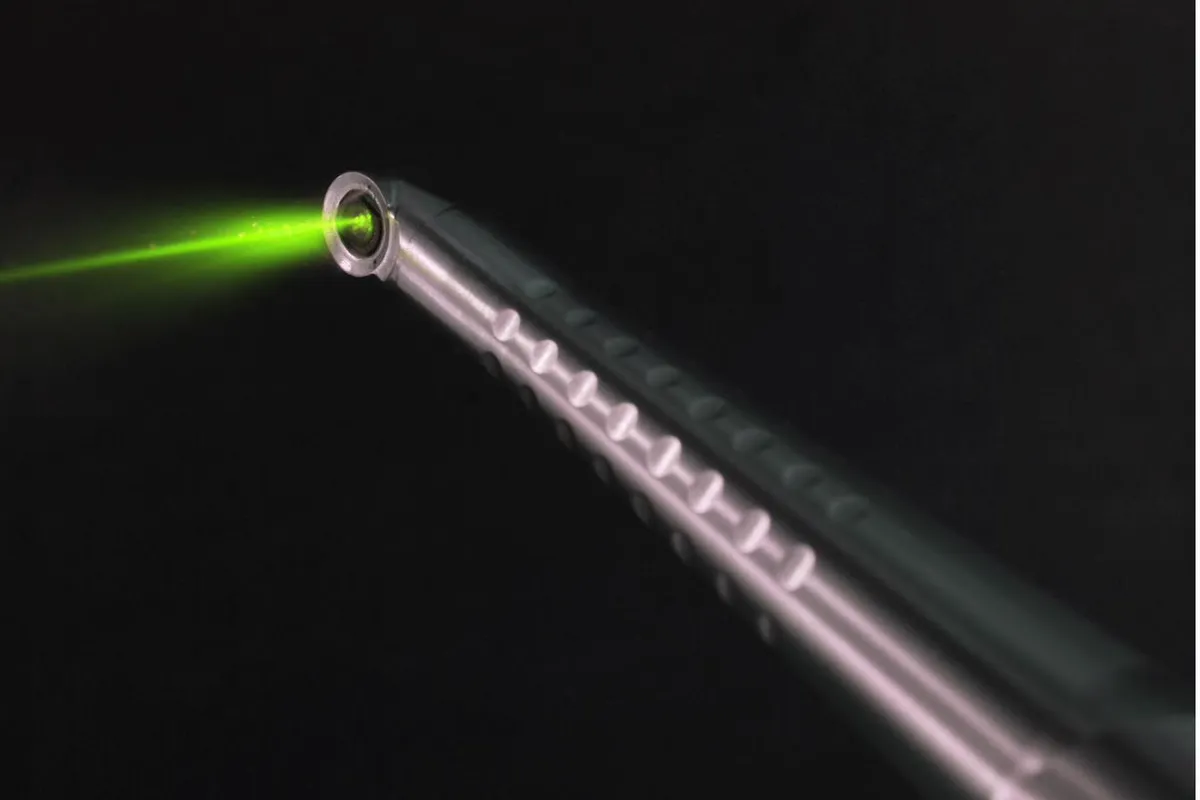 Er:YAG · 2940nm
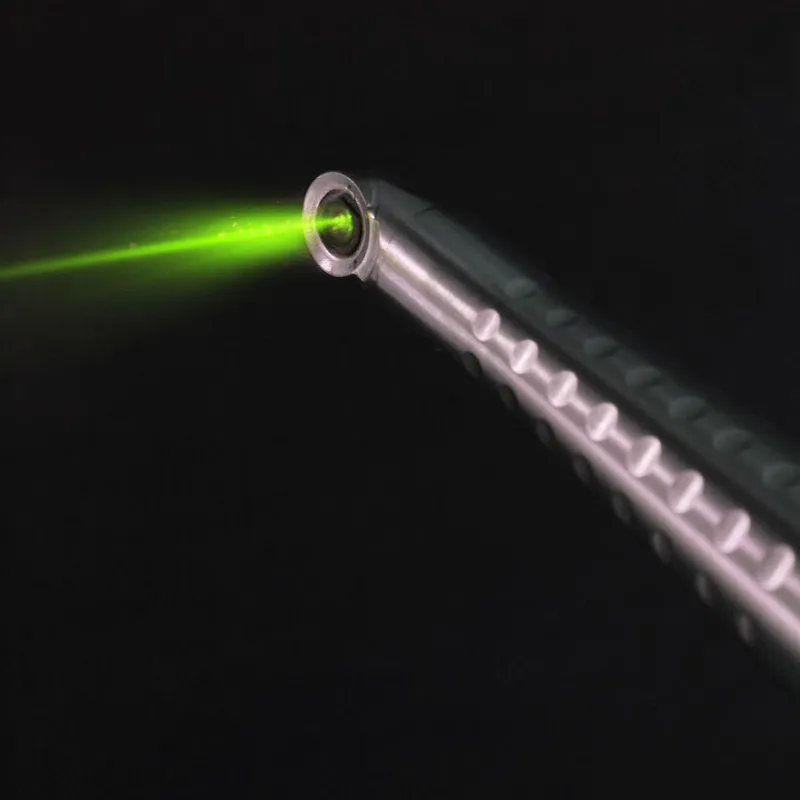 Cold ablation
Ceramic restorations — veneers, all-ceramic crowns, lithium disilicate work — are bonded to your teeth with resin cement. Over the years, that cement is what keeps them in place. Laser ceramic debonding works on the cement, not the ceramic.
The Er:YAG laser is tuned to a wavelength that passes through translucent ceramic and is absorbed by the cement layer underneath. The cement heats, expands by fractions of a millimetre, and loses its grip. The restoration releases — often intact — without us grinding it out.
That matters because the alternative is mechanical: cutting through the porcelain with a high-speed drill, taking the cement, the ceramic and sometimes a layer of the underlying tooth with it. What's underneath your veneer is yours. We'd rather keep as much of it as possible.
If any of these sound familiar, this is the conversation to start. We'll assess what you have, explain what's actually involved, and you decide where to go from there.
The colour has shifted, the surrounding teeth have changed, or the original work was done in an era of different shade matching. You've been close-mouth smiling in photos because of it.
The crown itself has a small fracture line or edge chip. The tooth underneath is fine — but the restoration needs to come off so a new one can be made.
The edge where the veneer or crown meets the tooth has started to stain, catch a fingernail, or feel rough. The bond has aged and it's time for a replacement.
Your old work was done well — for the time. You've been considering an upgrade for years, but the thought of having the old veneers ground off has been enough to keep putting it off.
One restoration keeps coming loose. The tooth underneath is healthy. We want to remove what's there carefully so it can be rebonded properly — without taking more structure than we need to.
For some patients the sound, vibration and aerosol of drilling out an old restoration is the single biggest reason they've put off addressing it. Laser debonding removes most of that experience from the equation.
The Er:YAG laser doesn't grind through the porcelain. It passes through it. The energy is absorbed by the resin cement underneath — the layer holding the restoration to your tooth — and that's where the work happens.
Er:YAG · 2940 nm
When a veneer or crown is fitted, a thin layer of light-cured resin cement holds it to the tooth. That cement is what keeps the restoration in place — sometimes for ten, fifteen, twenty years. It's also the thing that has to be released before the restoration can come off cleanly.
The Er:YAG laser produces light at 2940nm. Most all-ceramic restorations — porcelain veneers, lithium disilicate crowns, feldspathic ceramics — are transparent enough at that wavelength to let the laser pass through. The ceramic stays cool. The cement underneath absorbs the energy.
The cement layer absorbs the laser pulses and heats rapidly. Within seconds it expands by fractions of a millimetre, the bond strength drops, and the restoration loosens. The dentist tests it gently — and lifts it off, often in one piece.
Once the restoration is off, a thin film of cement remains on the tooth. This is removed gently with hand instruments and polishing — not with deep drilling. The aim is for the underlying tooth structure to be as close to how it was the day the veneer was first placed as we can manage.
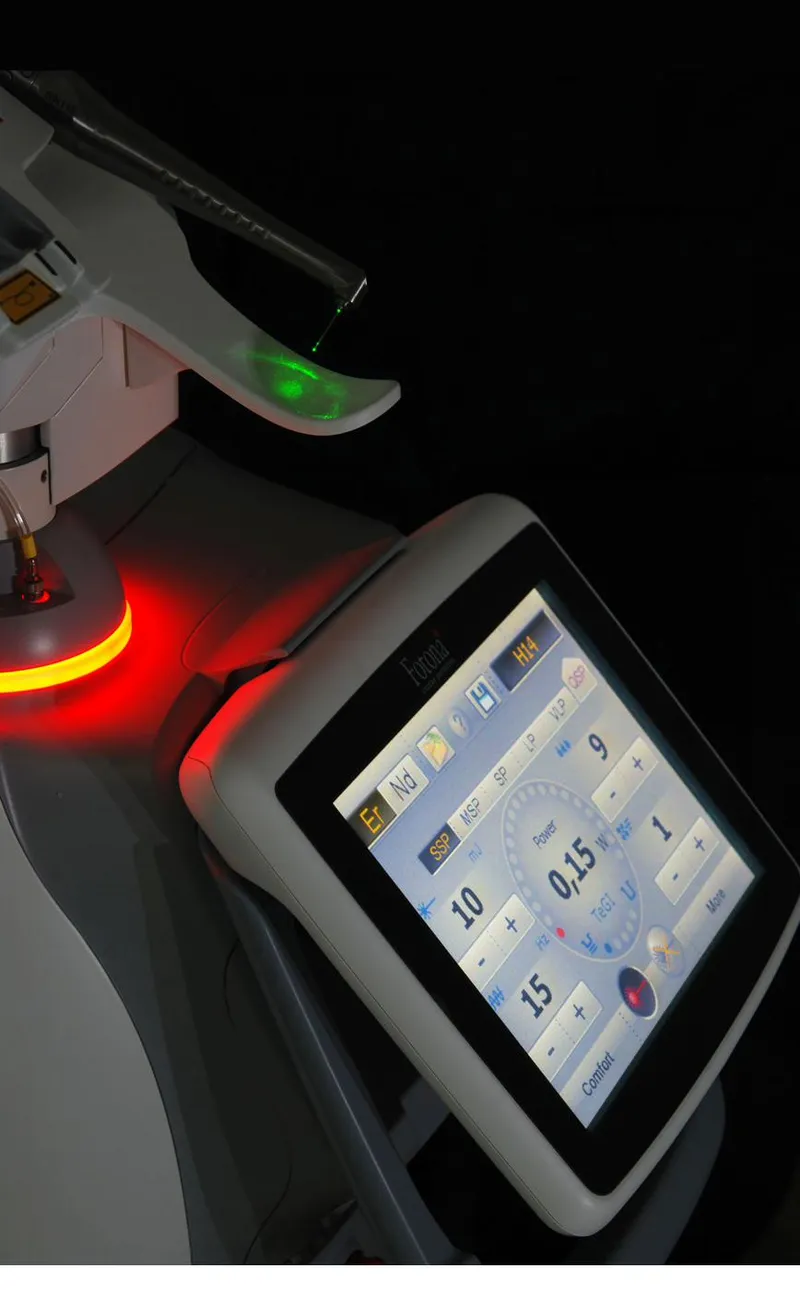 Fotona LightWalker
The Fotona LightWalker is a dual-wavelength dental laser used across endodontics, periodontics, restorative dentistry and oral surgery. For ceramic debonding, we use the Er:YAG wavelength almost exclusively — it's the one the cement absorbs and the ceramic doesn't.
The visible green light you see on the handpiece is just an aiming beam, helping the dentist line up exactly where the laser will pulse. The actual 2940nm wavelength is invisible. The system runs cooling water to keep the surface temperature controlled throughout the procedure.
We chose the LightWalker because it's the most published platform for laser dentistry protocols, including debonding studies in the peer-reviewed literature.
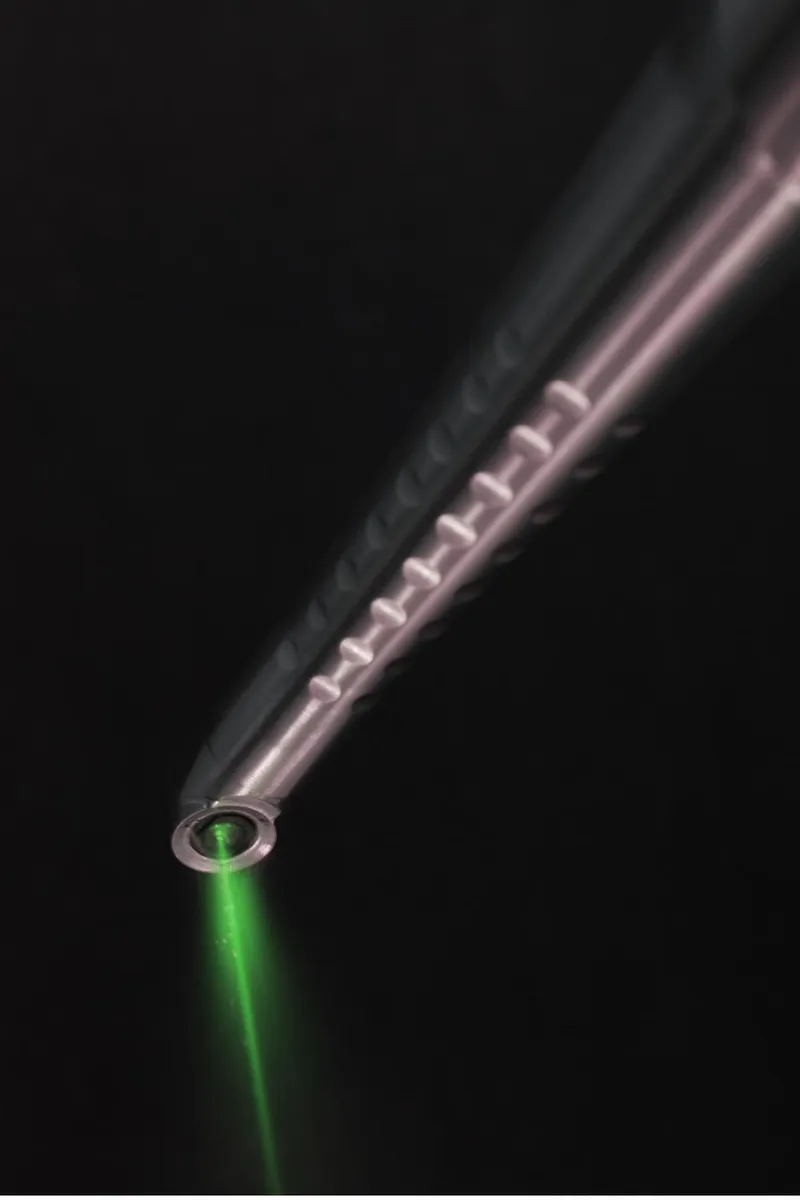
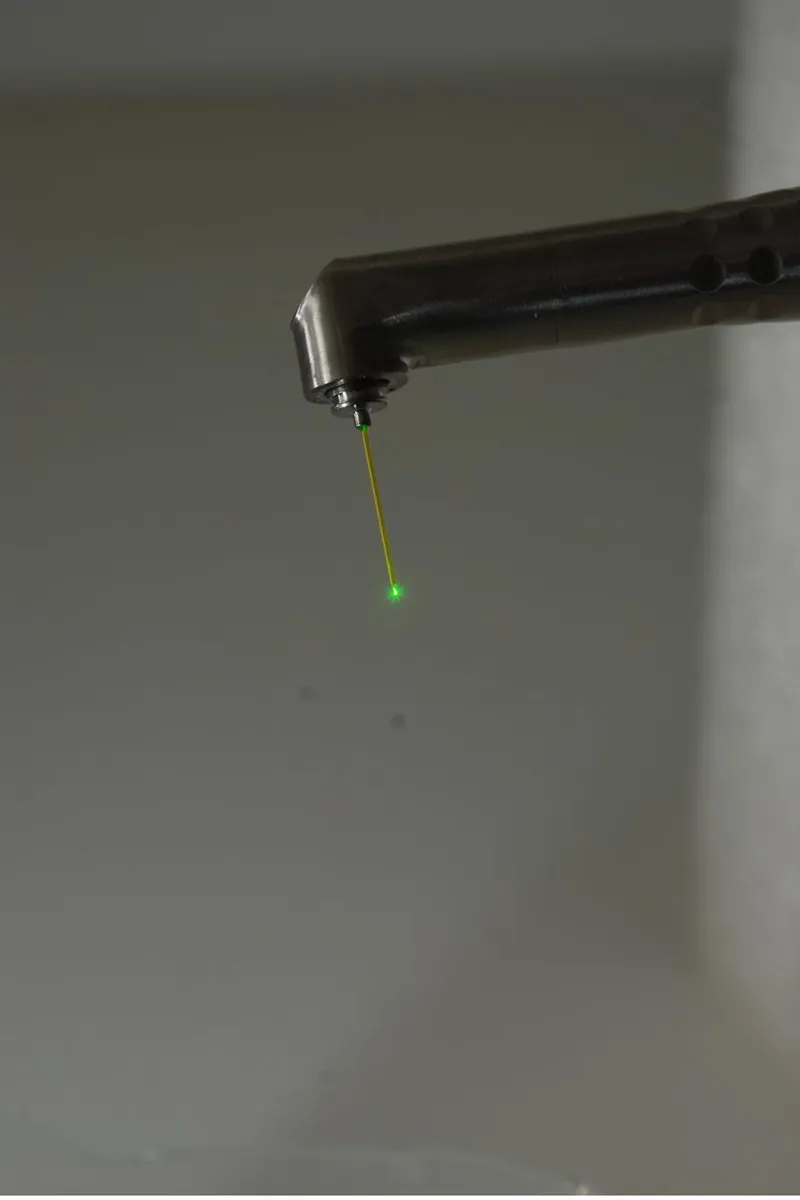
Most of what makes laser debonding feel different happens in the first ten minutes of the procedure. The rest of the appointment is the same as any restoration replacement — impressions, temporaries, planning the new work.
We look at what's there, take any radiographs needed, and confirm the ceramic type and bonding are suitable for laser debonding.
If we're replacing the restoration, we record the current shade and shape so the new work continues from the right starting point.
Laser-rated eyewear for you and the team. A rubber dam or cheek retractor isolates the area being treated.
The Er:YAG handpiece moves slowly across the restoration. Pulses are short. You'll hear a soft tapping sound — no drill.
The dentist tests the bond with a gentle hand instrument. When the cement has released, the restoration is lifted off — often intact.
Residual cement on the tooth surface is removed with hand instruments and gentle polishing. No deep drilling.
If a new restoration is planned, we take a digital scan or traditional impression of the tooth in its current state.
A temporary restoration is placed while the new one is made. We talk through next steps, aftercare, and book the fitting visit.
Neither approach is wrong. Both are routinely used in modern dentistry. The differences below are why some patients ask specifically about the laser-assisted option.
We've built the laser dentistry side of Magical Smiles around two questions — does this protocol have published support, and does it actually feel more comfortable for the patient sitting in the chair?
The Fotona LightWalker is the most published dental laser platform in the world. Debonding is one of its established uses, not an off-label experiment.
The team using the laser has completed manufacturer-led and post-graduate laser dentistry training. The protocol is followed — not improvised.
We confirm the type of ceramic, the bonding history and the clinical picture before recommending laser debonding. If it isn't suitable, we'll say so.
The principle is to keep the underlying tooth as intact as possible. That's why patients with previous restorative work often come specifically for this.
This isn't a procedure to rush. We schedule generous time so the laser passes can be done slowly and carefully, with the chair feeling settled.
Removal is rarely the end of the story. We plan the replacement restoration as part of the same conversation — colour, shape, materials, fit.
If your question isn't here, the consultation is the place for it. There's no obligation — we'll explain what's involved, what's suitable, and what isn't.
It's a way of taking old porcelain veneers, all-ceramic crowns and similar restorations off your teeth without grinding them out with a drill. A laser passes through the ceramic, softens the cement holding it in place, and the restoration lifts off.
The traditional approach involves cutting through the ceramic with a high-speed drill, which generates heat, vibration and a fine aerosol of ground-up restoration material. Laser debonding releases the cement instead, so the underlying tooth keeps more of its structure and the experience for the patient is quieter.
For nervous patients, the removal of the drill sound and vibration is often the single biggest reason to ask for the laser option.
It works best on all-ceramic restorations — porcelain veneers, lithium disilicate crowns and bridges (the e.max family), and feldspathic porcelain. Metal-ceramic restorations and gold work are not suitable for laser debonding because the laser doesn't pass through metal. Zirconia is in between — more reflective at the Er:YAG wavelength and may need additional steps.
We'll assess what you have and explain whether the laser approach makes sense in your case.
The intent of laser debonding is to leave the underlying tooth as untouched as possible. Because the laser releases the cement rather than grinding the ceramic, far less drilling is needed afterwards. A thin film of cement is removed gently with hand instruments and polishing.
What the tooth looks like underneath will depend on what was done when the veneer or crown was first placed — we will explain that on the day.
Releasing a single veneer typically takes 5–15 minutes of laser time. The full visit — including assessment, debonding, cement clean-up, impressions or scans for the new restoration, and a temporary where needed — usually runs 60–90 minutes per area being treated.
For many ceramic debonding cases, local anaesthetic is not required — the laser is acting on the cement, not on the nerve. We will assess this with you on the day. If you would prefer to have anaesthetic for any reason, that option is always available.
Sometimes — if the ceramic comes off intact and the design still suits you. More often, laser debonding is part of a planned upgrade or replacement, and a new restoration is made. Your dentist will discuss this with you at the planning consultation, including what would be sensible and what wouldn't.
Er:YAG laser debonding of ceramic restorations has been documented in the peer-reviewed dental literature since the early 2000s. The Fotona LightWalker is a TGA-registered dental laser used by laser-trained dentists internationally. The protocol is well-established. Whether it's suitable for your specific restoration remains a clinical judgement we'll make together.
Yes — laser ceramic debonding is offered across all three Magical Smiles clinics: Caroline Springs, Bacchus Marsh and Point Cook. When you call to book, we’ll arrange your appointment at the clinic that suits you best and walk you through what the visit looks like before you arrive.
Cost varies with the number of restorations being removed, what is being placed in their stead, and the complexity of the case. We will provide a written quote at your consultation, explain what is and isn't covered by your health fund, and discuss payment plan options if helpful. No surprises.
Laser ceramic debonding is offered across all three Magical Smiles clinics — Caroline Springs, Bacchus Marsh and Point Cook. Whichever feels closest to home or work, our team will help arrange a time that suits.
Burnside · Taylors Hill · Caroline Springs
Maddingley · Darley
Wyndham · Sanctuary Lakes
The Fotona LightWalker is used across a range of treatments — each tuned to a different tissue and a different goal.
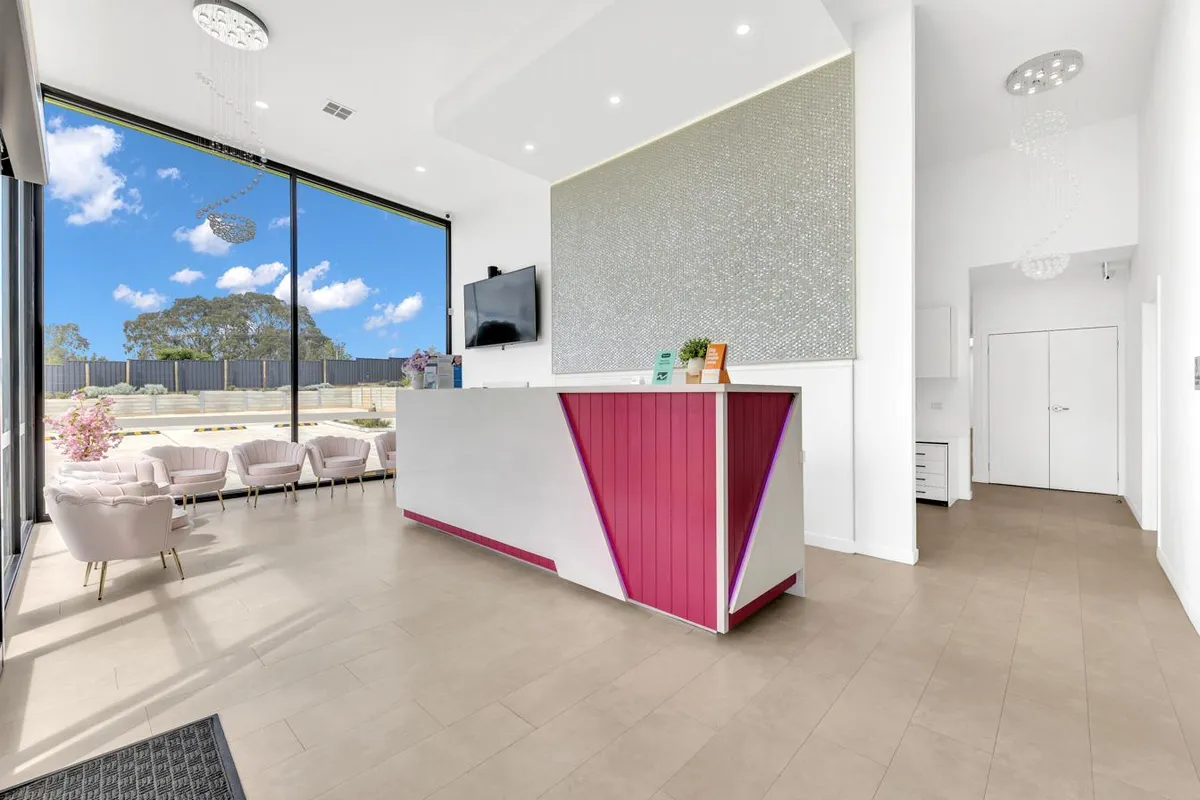
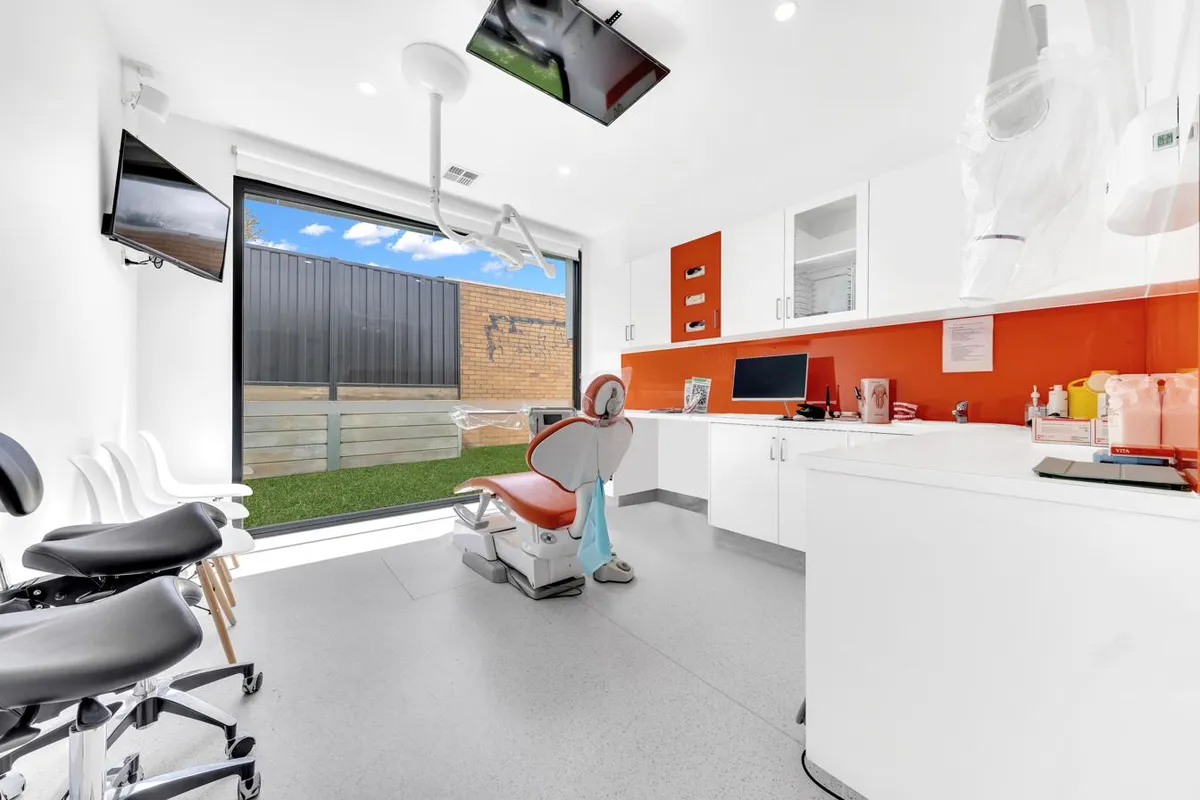
If you've been postponing a restoration upgrade because the removal part is what's putting you off, this is the conversation to start. We'll talk you through what's involved, what's suitable for your case, and what isn't. No pressure either way.