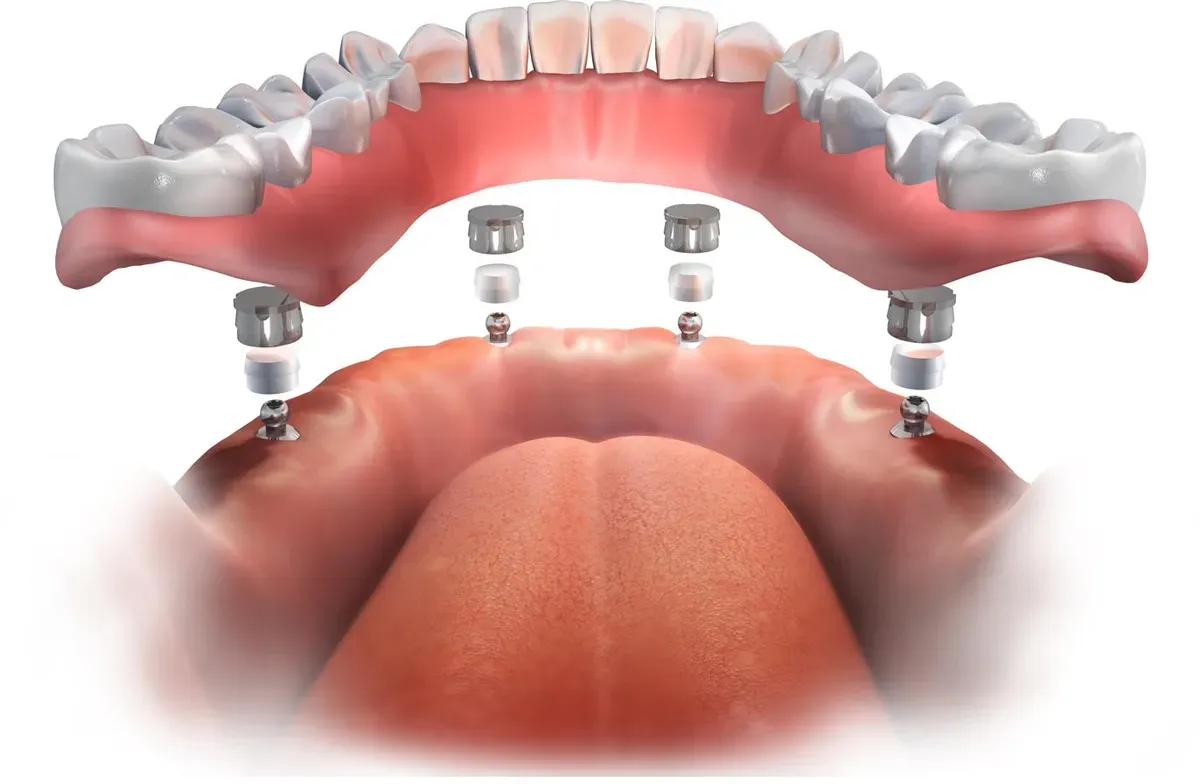
All-on-X Fixed Arch
Permanently fixed to a small number of implants. Functions like a full set of fixed teeth — no removal, no adhesive, cared for like natural teeth with brushing and regular review.
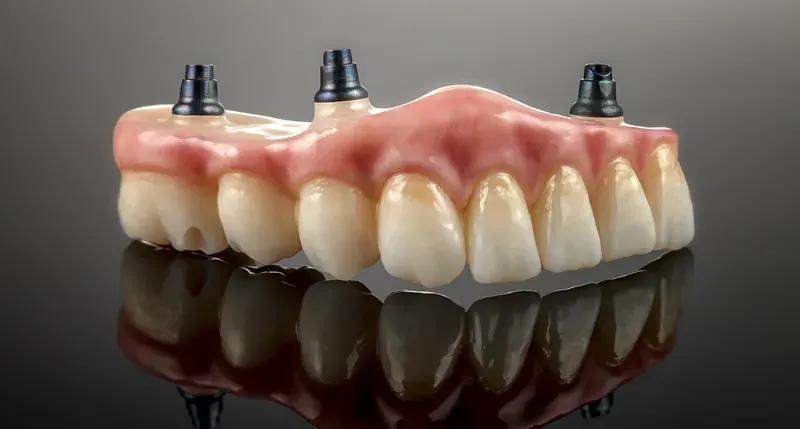
Maybe your denture shifts when you eat, or you've quietly ruled out certain foods altogether. All-on-X uses a small number of implants to support a fixed, full-arch replacement — and if a removable option still suits you better, an implant-supported overdenture can add real stability without going fully fixed. We'll talk through both honestly before anything is decided.
A denture can do a lot, but "getting by" and "not thinking about it" are two very different experiences. If a few of these sound familiar, it's worth a calm conversation about what a fixed or implant-supported option could look like for you.
All-on-X refers to a fixed, full-arch prosthetic supported by a small number of strategically placed implants — typically around four to six per arch, though the exact number depends on your bone volume and jaw shape. Rather than replacing each tooth individually, the whole arch is replaced as one connected, non-removable prosthetic.
Because it's fixed permanently to the implants, it functions much like a full set of natural teeth — no daily removal, no adhesive, no need to take it out overnight. It's a genuinely different approach from a conventional denture, and it's worth understanding the trade-offs against a removable implant-supported denture too, covered in the comparison below.
Both use implants to improve on a conventional denture — the honest difference is whether the result comes out at night or stays in permanently.
Permanently fixed to a small number of implants. Functions like a full set of fixed teeth — no removal, no adhesive, cared for like natural teeth with brushing and regular review.
A smaller number of implants than All-on-X support a denture that clips securely into place, adding real stability over a conventional denture while still coming out for cleaning each day.
Which option suits you depends on bone volume, general health, and how important a fully fixed result is to you personally. Suitability and results vary between individuals — confirmed together at your consultation.
Full-arch treatment involves more planning upfront, spread across a realistic number of appointments.
Consultation & 3D imaging
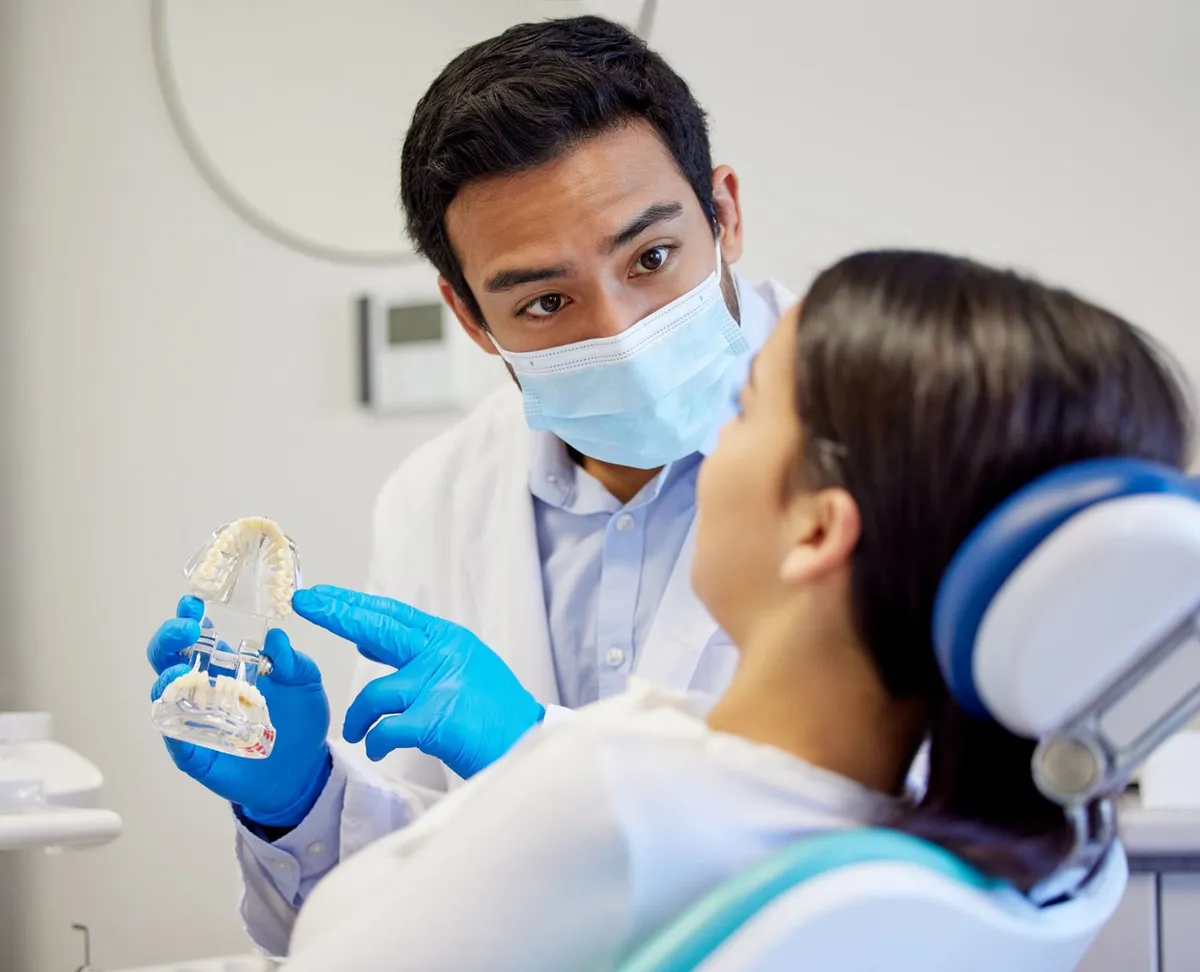
We assess bone volume across the whole arch and your general health, and talk through whether a fixed or removable implant-supported option suits you.
Any preparation needed
Bone grafting or a sinus lift is discussed if imaging shows it's needed — more common for full-arch treatment after years of tooth loss or denture wear.
Placing the implants
A small number of implants are placed per arch at planned positions, then given time to integrate before the final prosthetic is fitted.
Fitting your prosthetic
Your fixed arch or implant-supported overdenture is made, fitted and checked carefully for bite, comfort and appearance.
Review & ongoing care
Each supporting implant is reviewed at check-ups, helping catch any early signs of peri-implantitis.
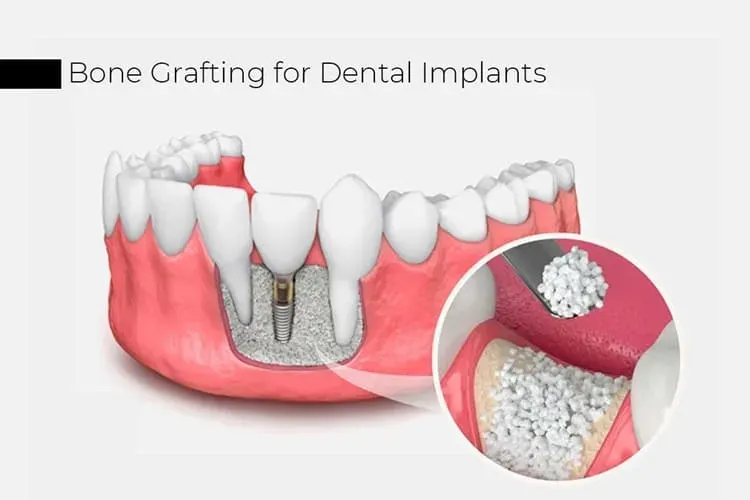
After years of missing teeth, or long-term denture wear, the jawbone across an arch can gradually thin — without natural tooth roots to support it, bone simply resorbs over time. This is genuinely common in patients considering All-on-X or an implant-supported denture, more so than for a single missing tooth.
Bone grafting rebuilds volume at the sites that need it, creating a stable foundation for the implants that will support your prosthetic. 3D imaging across the whole arch tells us exactly where grafting is, and isn't, genuinely needed.
Any surgical or invasive procedure carries risks. Before proceeding, please seek a second opinion from an appropriately qualified health practitioner.
For an upper-arch All-on-X or implant-supported denture, the maxillary sinus is a relevant factor for the back implant positions. In patients who've been missing upper back teeth for a long time, the sinus floor can sit close to the available bone, which is where a sinus lift comes in.
The sinus membrane is gently lifted and graft material placed beneath it, building the bone height needed for a stable implant position at the back of the arch. It's a well-established procedure specific to the upper jaw, and only recommended where your imaging shows it's genuinely required.
Any surgical or invasive procedure carries risks. Before proceeding, please seek a second opinion from an appropriately qualified health practitioner.
Because a fixed arch or overdenture relies on every one of its supporting implants, we check each implant individually at review appointments — inflammation around one (peri-implantitis) doesn't automatically mean the others are affected, and it's usually picked up early. Cleaning underneath a fixed prosthetic is part of what we'll show you, since it's different from cleaning natural teeth. For the wider picture, the dental implants hub compares the main options side by side.
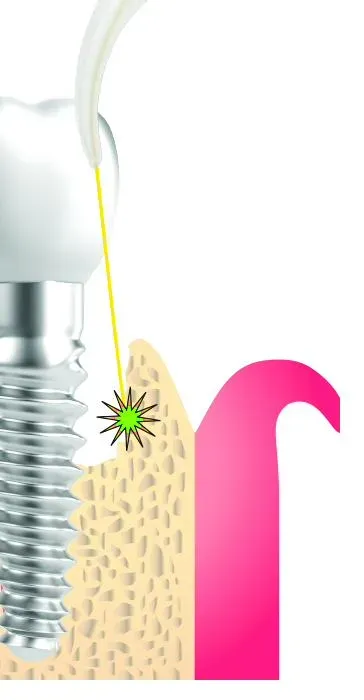
If peri-implantitis is found on any supporting implant, treatment can include laser-assisted decontamination of the affected surface, alongside a review of your home care routine. We offer dedicated peri-implantitis management across all three clinics — read the full peri-implantitis page for the detail →
Full-arch treatment is a bigger investment than a single implant, and it's fair to want the range upfront. Cost depends on whether you're considering a fixed All-on-X arch or a removable implant-supported overdenture, and whether bone grafting or a sinus lift is needed. We work with payment options that spread cost across smaller, regular amounts.
Know the numbers before you decide anything.
Curious what All-on-X might cost per arch? Open the repayment estimator →
Estimate only — not a quote or credit approval. Your actual cost is confirmed at consultation, and depends on the number of implants and any bone grafting or sinus lift needed.
We accept






About the estimator: it gives an indicative figure only, based on a typical starting price per arch — it is not a quote. Every plan is priced individually once we've assessed your jaw with 3D imaging, and bone grafting or a sinus lift, if needed, is costed separately. You'll always see the exact cost in writing before agreeing to treatment. Repayment figures are illustrative, calculated using Humm/NDP's own plan-fee formula for the term selected, so Humm's fees are already included; finance is subject to Humm's own eligibility criteria and approval, and is not guaranteed.
We lay out All-on-X and implant-supported overdentures side by side, so you choose based on what suits your life, not a sales pitch.
3D imaging assesses volume across the entire jaw, so grafting or a sinus lift is only ever recommended where it's genuinely needed.
Every supporting implant is checked at regular reviews, with laser-assisted peri-implantitis care available if it's ever needed.
A short consultation with 3D imaging is usually enough to know whether a fixed arch or an implant-supported overdenture suits you better. If you'd like to ask a few things first, give us a call.
Book a consultation (03) 8358 2565Information on this page is general in nature. Treatment outcomes, timelines and suitability vary between individuals — we'll examine your jaw and explain what's realistic for your situation before you decide anything.
Major health funds
A short consultation with 3D imaging is usually enough to tell whether a fixed All-on-X arch or an implant-supported overdenture suits you best, with a clear, written cost estimate before you decide anything.