✦ Now welcoming new patients  ·  Same-day emergency appointments where possible  ·  Afterpay, SuperCare & all major health fundsCaroline Springs · (03) 8358 2565
Certified Myobrace® Provider · Caroline Springs

If your child sleeps with their mouth open, this isn’t something to wait out.

The years between three and ten quietly decide the shape of an adult smile — not because of the teeth themselves, but because of how a child breathes, swallows, and where their tongue rests when no one is thinking about it. Myofunctional therapy and the Myobrace® System are about noticing those habits while the jaw is still soft enough to gently grow into the space teeth will need. Teens and adults too — outcomes look different, but the system has options at every stage.

Certified Myobrace® Provider  ·  Magical Smiles Caroline Springs
Australian-developed system  ·  Used in over 100 countries  ·  Approach trusted by clinicians worldwide
What you might be noticing

A list of small things that often arrive together.

Most parents don’t walk in asking about “myofunctional therapy.” They walk in because their seven-year-old snores like a small adult. Because reading homework is a fight every night and the teacher has mentioned tiredness again. Because the new front teeth are coming in crooked and they remember a sibling needing braces for years. Individually, these things mean almost nothing. Together, they often tell the same quiet story — about how the child breathes, swallows, and where their tongue lives when no one is paying attention.

“If we wait another six or twelve months and nothing changes — same snoring, same tired mornings, same crowded teeth coming through — what would that actually look like?”
  • 01Sleeps with the mouth open, or you can hear them breathing across the room.
  • 02Snores most nights, even though they’re small.
  • 03Wakes up tired, or wets the bed past the age most children don’t.
  • 04Eats slowly, chews with the mouth open, or struggles to finish meals.
  • 05Speech sounds a little “mushy” or there’s a lisp that won’t shift.
  • 06Sucked a thumb or dummy past age four, or still mouth-breathes during the day.
  • 07Front teeth are coming through crowded and you can already see there’s no room.
  • 08The upper teeth and lower teeth don’t quite meet the way they should.
3 — 10
The widest opportunity window
for myofunctional change
100+
Countries where Myobrace is
used by certified providers
4
Treatment stages: habit, arch,
alignment, retention
AU
Designed and developed
here in Australia
Causes, not symptoms

Crooked teeth are usually a symptom, not the cause.

The reason a child’s teeth end up crowded is rarely the teeth themselves. Most of the time it’s three quiet daily habits shaping the bone underneath. Address those, and the teeth often have somewhere to go.

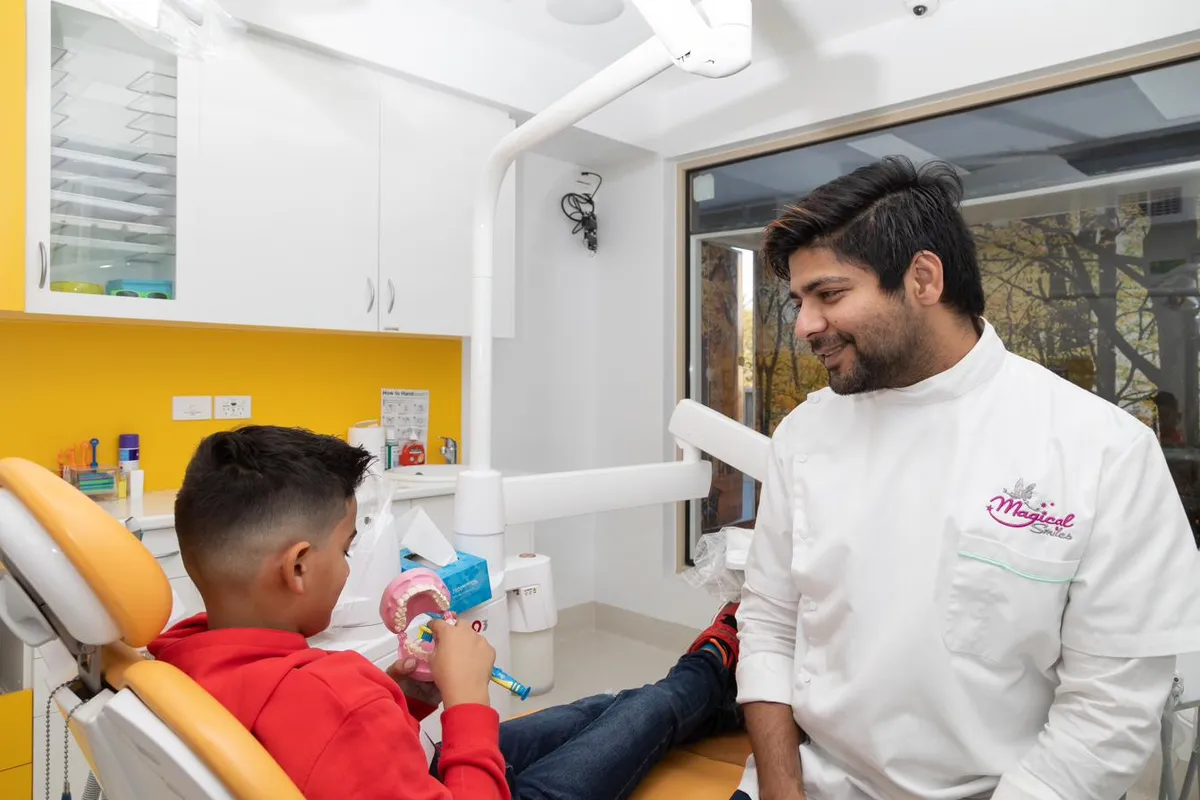
A clinician at Magical Smiles Caroline Springs showing a young patient how the teeth and jaw work, using a dental model.

Our team at Magical Smiles Caroline Springs — explaining the why before the what.

Three habits shape how the upper jaw develops — how a child breathes, where their tongue rests, and how they swallow. Each is a small thing on its own. Done thousands of times a day, over the years a child is growing fastest, they decide a lot.

The Myobrace® System is built around correcting these three habits with a series of soft, removable appliances and short daily activities. Not by forcing teeth to move, but by giving the jaw a chance to develop into the shape it was always meant to be.

01 / Habit

Mouth breathing

A child who breathes through their mouth all day — and especially all night — rests with their lips apart and their jaw dropped. The upper jaw, which is meant to be supported from inside by the tongue and from outside by gently closed lips, develops narrower than it would otherwise. Linked to snoring, restless sleep, daytime tiredness, and crowded upper teeth.
02 / Habit

Low tongue posture

The tongue is supposed to rest gently against the roof of the mouth. When it sits low — on the floor of the mouth instead — the upper jaw loses its natural inside shaper. The arch grows narrower. There’s less room for the adult teeth still waiting to come through.

03 / Habit

Incorrect swallow

Children swallow up to two thousand times a day. A correct swallow draws the tongue upward against the palate. An incorrect swallow — sometimes called a tongue thrust — pushes forward against the front teeth instead. Two thousand small forwards-pushes a day, over years, slowly tips teeth out and changes the bite.

The why of early

A window that’s widest while still growing.

Bone responds differently at six than at sixteen. While a child is still growing, the upper jaw can be gently encouraged into a wider, more spacious shape — the kind that has room for the adult teeth without crowding. Once active growth slows, the work changes shape rather than disappearing — Myobrace® for Teens addresses alignment as adult teeth come through, and the Myosa® System covers adult myofunctional, breathing and jaw concerns.

Age and jaw growth potential — the early intervention window Age timeline showing that myofunctional intervention is most effective during active jaw growth between ages three and ten, with continued options through teens and adults. FIG. 01 — AGE & JAW GROWTH POTENTIAL Most growth happens early. Some happens later. Bone responds best while a child is still growing — but the work doesn't stop being useful at fifteen. GROWTH POTENTIAL EARLY INTERVENTION Ages 6 — 10 where habit + growth meet 3 earliest signs 6 first adult teeth 8 mixed dentition 10 jaws still flexible 13 teens — alignment 16 growth slowing ADULT Myosa appliances Indicative — every patient develops on their own timeline. The system has options at every stage; the assessment is individual.
Two paths: early versus later intervention Comparison diagram contrasting addressing causes during active growth against correcting once growth has finished. FIG. 02 — TWO PATHS THROUGH THE SAME PROBLEM Same situation. Different starting point. Earlier means more bone growth left to guide — but later still does meaningful work. PATH A · DURING ACTIVE GROWTH Address the habits — the jaw grows into the new shape. AGES 6 — 10 AGES 8 — 12 AGES 10 — 14 ONGOING Habit + arch development Adult teeth come through Less to correct later Stable function Soft appliance + daily activities Often into prepared space Often, but not always Habits as retainer PATH B · TEEN OR ADULT — AFTER ACTIVE GROWTH Different appliances. Still real change — over a different timeline. AGE 13+ TEEN YEARS ADULT ONGOING Myobrace for Teens Dental alignment Myosa for adults Habits, sleep, jaw As adult teeth come through Often alongside braces Breathing, TMJ, habits Outcomes are different — still real A simplified comparison. Every person is different — the right path depends on their assessment, not the diagram.
Children. Teens. Adults.

The window is widest early — but it doesn’t close at fifteen.

The case for starting early is honest: children grow fastest, bone responds most, and habits are easiest to retrain before they’ve been practised for twenty years. None of that means the system stops being useful once growth slows. We’ve seen meaningful improvements in teens whose adult teeth were still settling, and in adult patients who never connected their snoring, jaw discomfort or lifelong mouth-breathing to habits formed in childhood. Different appliances, different timelines, same underlying idea.

01 / Best window

ChildrenAges 3 — 10

The widest opportunity. Habit correction while the jaw is still actively growing, often resulting in more spacious arches, less crowding, and meaningfully less correction needed in the teenage years.

  • Soft removable appliances + daily activities
  • Habit correction first, alignment follows
  • Often reduces or eliminates the need for braces later
02 / Still real change

TeensAges 10 — 16

Adult teeth are still settling and there’s often growth left to work with. Myobrace® for Teens is used to align teeth as they erupt — sometimes alongside braces, sometimes instead of more extensive correction.

  • Myobrace® for Teens appliance
  • Often combined with or shortens braces treatment
  • Same habit retraining principles, age-appropriate
03 / It’s never too late

Adults16 and beyond

When the jaw has stopped growing, the work changes shape rather than disappearing. The Myosa® System — from the same Australian company — covers adult myofunctional therapy, mild sleep-disordered breathing, TMJ discomfort, teeth grinding and habit correction.

  • Myosa® appliance range for adults
  • For snoring, mild sleep apnoea, TMJ and habit-driven concerns
  • Often paired with myofunctional exercises

Outcomes are individual at every age — we’ll talk through what’s realistic for you or your child at the consultation, with no obligation to proceed on the day.

The system we use

Myobrace® — an Australian approach to preventive orthodontics.

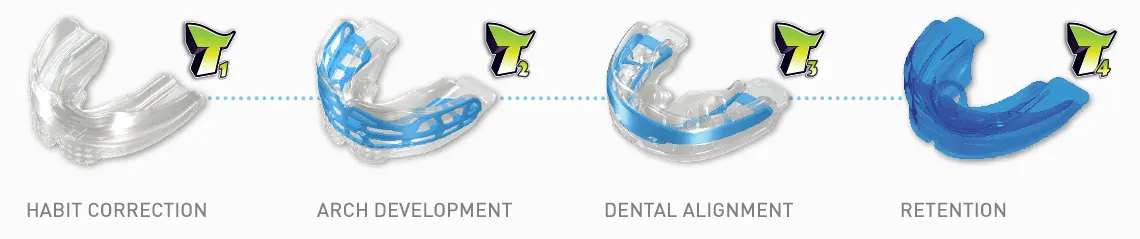
As a Certified Myobrace® Provider, our team has been trained directly in the Myobrace® System — developed in Australia by Dr Chris Farrell at Myofunctional Research Co. It’s a system, not a single appliance: a series of soft, removable mouthpieces worn for one to two hours during the day and overnight while sleeping, paired with daily activities that retrain breathing, tongue posture and swallow. The aim is to address the habits behind crowded teeth, not just the teeth themselves.

The Myobrace four-stage appliance sequence: habit correction, arch development, dental alignment, and retention.

Myobrace® appliance sequence — image courtesy of Myofunctional Research Co. The system uses a series of appliances across four stages: habit correction · arch development · dental alignment · retention.

The appliance + the activities

Soft. Removable. Worn during quiet time and overnight — and the exercises do half the work.

Each stage of the Myobrace® System uses a different appliance, designed to fit comfortably during the day’s quiet hours and through the night. They’re removed for meals and for school. Most children adapt within a few nights.

The appliance alone isn’t the whole story. Patients also do short daily Myobrace® Activities — simple exercises for nasal breathing, lip closure, tongue posture and swallow. Two to three minutes, twice a day. For children, parents do them alongside, so it becomes a small shared rhythm rather than a chore.

Compliance is honestly the biggest variable in outcomes. We’ll talk about that openly at the consultation, including what families realistically find manageable.

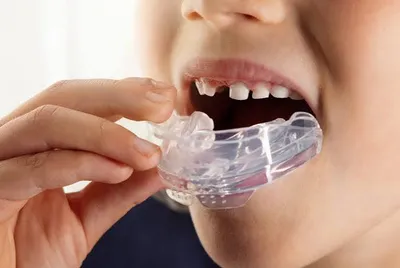
A Myobrace appliance, the soft removable device worn during quiet time and overnight as part of the Myobrace System.
What the first visit actually looks like

Before anything is recommended — an honest assessment.

Booking a consultation doesn’t commit you to anything. It’s a conversation, a look, and a clear next step — whether that’s Myobrace®, a different approach, a wait-and-see, or a referral to a paediatric specialist.

A young girl sitting comfortably in the dental chair during her first Myobrace consultation at Magical Smiles.
01  /  ~15 mins

Listening, first.

We start with what you’ve noticed at home. Sleep, breathing, eating, the bedtime stories you’ve been told by other dentists, the worry that brought you in. Your child is welcome to play, draw, or just sit on your lap.

02  /  ~10 mins

A gentle look.

We assess the way your child breathes at rest, how their lips and tongue sit, where the adult teeth are tracking, the shape of the upper arch, and the overall bite. Nothing invasive. Nothing that requires them to sit still longer than they want to.

03  /  ~10 mins

A plain conversation.

If we see signs that myofunctional therapy may help, we’ll explain why, what the path might look like, and roughly how long. If we don’t, we’ll tell you that too — there’s no incentive for us to recommend treatment that isn’t indicated. If a specialist referral fits better, that’s the recommendation.

04  /  Your decision

No pressure to decide today.

Most parents go home, talk it over, and come back when they’re ready. We’ll write down what we discussed, including the option of doing nothing for now and reviewing in six months. There’s no rush from our end.

Self-selecting, no pressure

This probably is for you if — and probably isn’t if —

Myobrace® isn’t the right answer for every patient. We’d rather you arrive at your decision before you book, not at the chair.

This is for you

This is probably for you if…

  • ·You’re a parent of a child between three and fifteen who’s mouth-breathing, snoring, or showing crowded teeth coming through.
  • ·You’re a teen and your adult teeth are still settling — Myobrace® for Teens may suit, sometimes alongside or instead of braces.
  • ·You’re an adult dealing with snoring, mild sleep-disordered breathing, TMJ discomfort, or habits you’ve had your whole life — Myosa® appliances are part of the same family.
  • ·You’d rather address the cause of crooked teeth or breathing issues than just correct the symptom.
  • ·You’re comfortable with a treatment that asks for daily engagement — activities, overnight wear, and small consistent effort.
  • ·You want a clinician who’ll be honest about whether it suits you or your child, including saying no when it doesn’t.
Probably not

This probably isn’t for you if…

  • ·You’re looking for a quick fix — this is gradual, gentle, and active. Months not weeks.
  • ·Daily wear and activities won’t realistically fit your household or your routine right now — that’s honest, and it’s fine to wait until they will.
  • ·The situation is significantly more complex than habit-related growth or alignment — some patients need a different specialist approach, and we’ll say so.
  • ·You want a finished, set-in-place orthodontic result with no ongoing engagement — both Myobrace® and Myosa® ask for daily participation.
  • ·You’d prefer braces or aligners as a primary approach — that’s a valid path too, and we can talk you through it.
Common questions, plain answers

Things people actually ask.

The most effective window is roughly six to ten — the period when the first adult teeth arrive, the jaw is still actively growing, and habits remain flexible enough to retrain. That’s also where we see the most preventive change. Younger is often easier than older, but it isn’t a hard cut-off.

Treatment doesn’t stop being useful at fifteen. Myobrace® for Teens is used as the last adult teeth come through — sometimes alongside braces, sometimes instead of more extensive correction. For adults, the Myosa® System (from the same Australian company) covers myofunctional habit work, mild sleep-disordered breathing, jaw joint discomfort, teeth grinding and snoring. We’ve seen meaningful improvements in teens whose teeth were still settling and in adult patients who’d never connected their snoring or jaw discomfort to lifelong habits. The assessment is what tells us whether the fit is right, not the year on the birth certificate.

Sometimes, but not always — and it’s important we’re honest about that. Myobrace® addresses the underlying habits and growth patterns that often cause crooked teeth in the first place. Many children who complete it have noticeably less correction to do later, and some don’t need braces at all. Others still need braces or aligners afterwards, but with a better foundation underneath. Outcomes vary, and we’ll talk through realistic expectations at your consultation.

For children, the full programme typically runs across the active growth years, often somewhere between eighteen months and three years, depending on the child’s age, the habits being addressed, and how consistently the daily activities are done at home. For teens and adults, timelines and appliance sequences differ — we discuss what’s realistic for each person at the consultation.

It means our team has completed the formal training programme run by Myofunctional Research Co. (the Australian company behind the Myobrace® System) and is registered with them as a treatment provider. We have access to their full appliance range, their patient activity programmes, and ongoing clinical support — the same standard of care that Myobrace® providers deliver in over 100 countries worldwide.

Typically one to two hours during the daytime (often during quiet time, reading or screen time at home) plus overnight while sleeping. It’s removed for meals and for school. Compared to braces, it’s much less visible to other children and much less of a daily presence outside the home.

The appliances are soft and designed to be gentle. Most patients adapt within a few nights — the first night or two can feel a little odd, in the way any new mouthpiece does. There are no brackets, no wires, and no tightening appointments. If a particular appliance is genuinely uncomfortable, we adjust or change it; we don’t push through.

This is the honest answer most clinics avoid: compliance is the single biggest variable in Myobrace® outcomes. It works when it’s worn and the activities are done. It doesn’t when it isn’t. That’s why we spend real time at the consultation talking about what’s realistic for your family, not just whether it’s clinically indicated. If now isn’t the right moment, waiting six months is a perfectly reasonable answer.

We don’t quote treatment costs without a proper assessment — the path varies enough that any number we gave you over the phone would be a guess. We’ll provide a written plan and a clear total at your consultation, with no obligation. Some elements may be claimable through private health extras (depending on your level of cover and the specific item codes), and your child may be eligible for the Child Dental Benefits Schedule for related general dentistry; we cover both at the visit. Afterpay, Zip and SuperCare are also available where helpful.

When a child breathes through their mouth all day and night, their lips rest apart and their tongue sits low instead of pressing gently against the roof of the mouth. The upper jaw — which is shaped from inside by the tongue — develops narrower than it would otherwise. Less width means less room for adult teeth, which often emerge crowded. Mouth breathing is also linked to disturbed sleep, daytime tiredness, and a more “long-faced” growth pattern. Addressing the breathing pattern early gives the jaw a chance to grow into the room teeth will need.

Book a consultation at Magical Smiles Caroline Springs — or call us on (03) 8358 2565 and we’ll guide you. The first visit is an honest assessment, not a sales pitch. If we see signs that myofunctional therapy may help, we’ll explain why and what the path could look like. If we don’t, we’ll say so. You leave with a clear next step either way, and no pressure to commit on the day.

Three clinics, one standard

Available at these clinics.

Myobrace® consultations and treatment are led from our flagship Caroline Springs clinic. Initial consultations are available across all three locations — we’ll coordinate the care wherever you are in Melbourne’s west.

Flagship · Certified Myobrace® Provider 01

Caroline Springs

Burnside · Taylors Hill · Caroline Springs

Address1 Lancefield Drive, Caroline Springs VIC 3023
HoursMon — Sat · 9:00 AM – 5:00 PM
02

Bacchus Marsh

Moorabool · Bacchus Marsh · Maddingley

ServiceConsultations — treatment coordinated with Caroline Springs
HoursMon — Sat · 9:00 AM – 5:00 PM
03

Point Cook

Wyndham · Sanctuary Lakes · Point Cook

ServiceConsultations — treatment coordinated with Caroline Springs
HoursMon — Sat · 9:00 AM – 5:00 PM
Payment options accepted

Need help affording care? SuperCare may be an option.

The ATO may approve early superannuation release on compassionate grounds for clinically necessary dental treatment. SuperCare assists with the application — approval depends on individual circumstances and is not assured. Early release may have long-term retirement-savings implications.

Learn more →

Ready to book your visit?

Same-week appointments available across all three clinics. Book a Myobrace® consultation at Magical Smiles Caroline Springs — our Certified Myobrace® Provider clinic — or call any of our locations and we’ll guide you. Afterpay, Zip, Humm and SuperCare available.

Caroline Springs (03) 8358 2565
Bacchus Marsh (03) 8001 7008
Point Cook (03) 8338 1515