
No more holding a tray of goop in your mouth.
If your last dental impression involved a tray of putty and a long, slightly gaggy wait for it to set, it's worth knowing things have moved on. A small handheld scanner now captures a digital 3D model of your teeth in minutes, and for treatments like implants or wisdom teeth, 3D imaging gives us a much fuller picture than a flat X-ray ever could.
You've probably wondered what that screen was showing.
Most patients notice this technology before they understand it — a screen in the corner of the room, a scanning wand, a machine that circles slowly around your head. A few of these might sound familiar.
If you are exploring other equipment, the Fotona LightWalker page explains the laser separately. For whitening methods, the TouchWhite vs Zoom whitening comparison addresses that different question.
- You remember gagging on a putty tray at a previous dentist, and dread the thought of doing it again.
- You've seen a 3D tooth model appear on a screen and wondered how it got there.
- You're weighing up aligners, implants or wisdom teeth removal and want to understand how it's planned.
- You'd simply like to see your own teeth the way your dentist does.
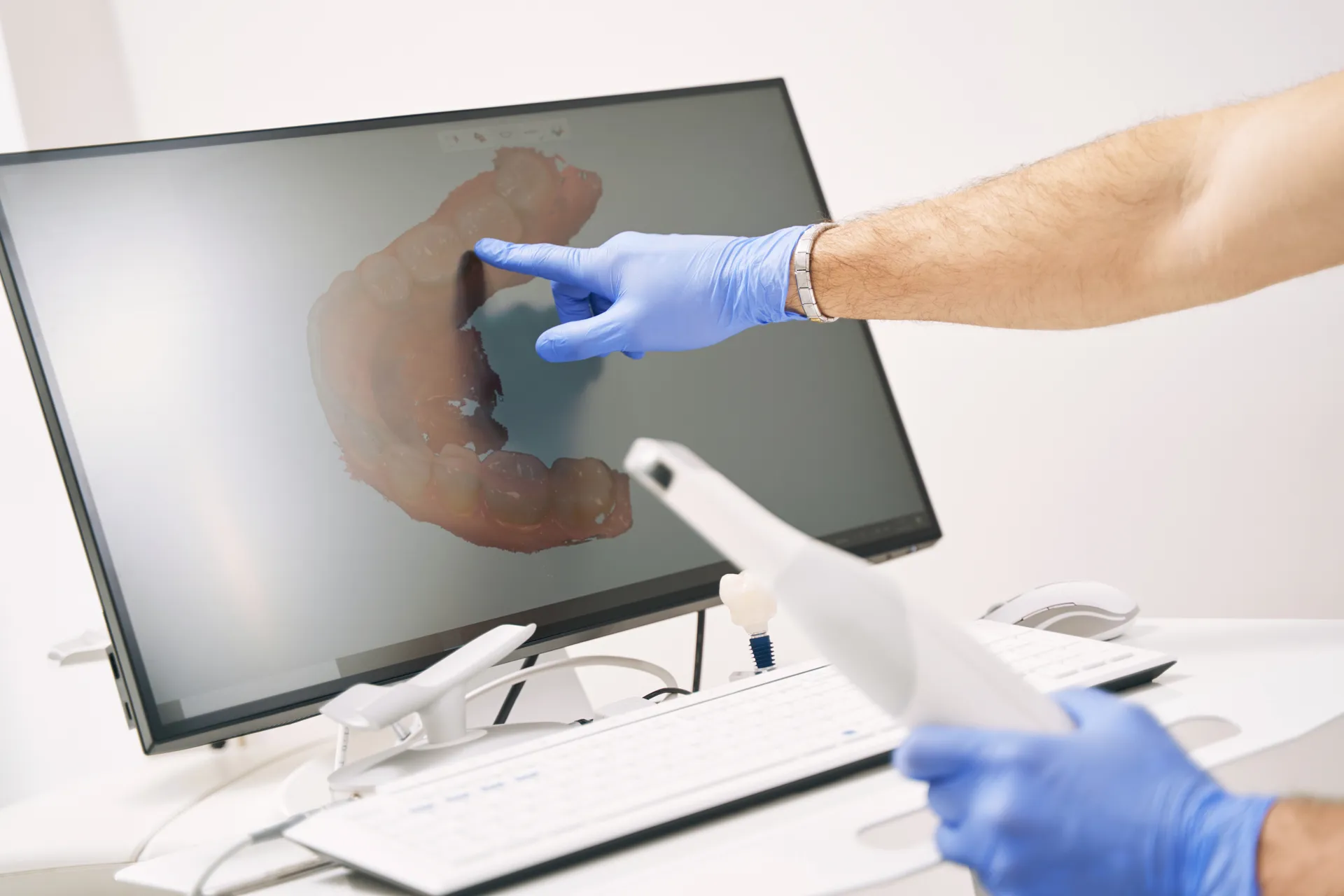
What digital scanning actually replaces.
Digital scanning uses a small, handheld wand to capture a 3D digital model of your teeth and gums, built up from a series of images taken as the wand passes over your mouth. The model appears on a monitor in real time, so any area that needs a clearer capture can simply be re-scanned on the spot.
For a lot of treatments — clear aligners, crowns, mouthguards, retainers — this now replaces the traditional impression tray and putty altogether. No setting time, no strange taste, and a model you and your dentist can both look at and discuss together on screen.
If you were looking for anaesthetic information rather than scanning, read about the wand on its own treatment page.
What 3D imaging adds.
- A three-dimensional view. Rather than a single flat picture, 3D imaging builds a model showing teeth, roots, nerves and bone from every angle.
- More detailed planning. This depth of detail is particularly useful for implants, wisdom teeth assessment, and some orthodontic and root canal planning.
- Used only when it's genuinely useful. Not every visit calls for 3D imaging — a standard X-ray is often enough, and we'll only recommend the fuller scan when your treatment planning actually benefits from it.
Our imaging equipment is operated by trained staff within standard safety guidelines, and only used when clinically appropriate.
Do you actually need either of these?
Not every visit calls for a scan or 3D imaging — here's an honest guide.
Likely relevant if you're considering...
- Clear aligners or braces, where a digital scan maps your starting position.
- Dental implants, where 3D imaging helps assess bone and nerve position.
- Wisdom teeth removal, where 3D imaging shows how the tooth sits against nerves.
- A crown, bridge, or mouthguard made from a digital model instead of a putty impression.
Probably not needed if...
- You're due for a routine check-up — a standard X-ray is often sufficient.
- Your dentist hasn't identified a specific reason for deeper imaging.
- You're simply curious — we're happy to show you how it works without it being part of your treatment.
Where this shows up in our treatments.
What the appointment actually looks like.
Confirming what's needed
We decide together whether a digital scan, 3D imaging, or both are genuinely useful for your treatment.
The scan or imaging itself
A few minutes with the scanning wand, or a short, still moment for 3D imaging — no putty, no long wait.
Reviewing it together
We look at the model or scan on screen with you, and talk through what it shows in plain English.
Using it for your plan
The scan or imaging feeds directly into planning your treatment — whether that's aligners, an implant, or something else.


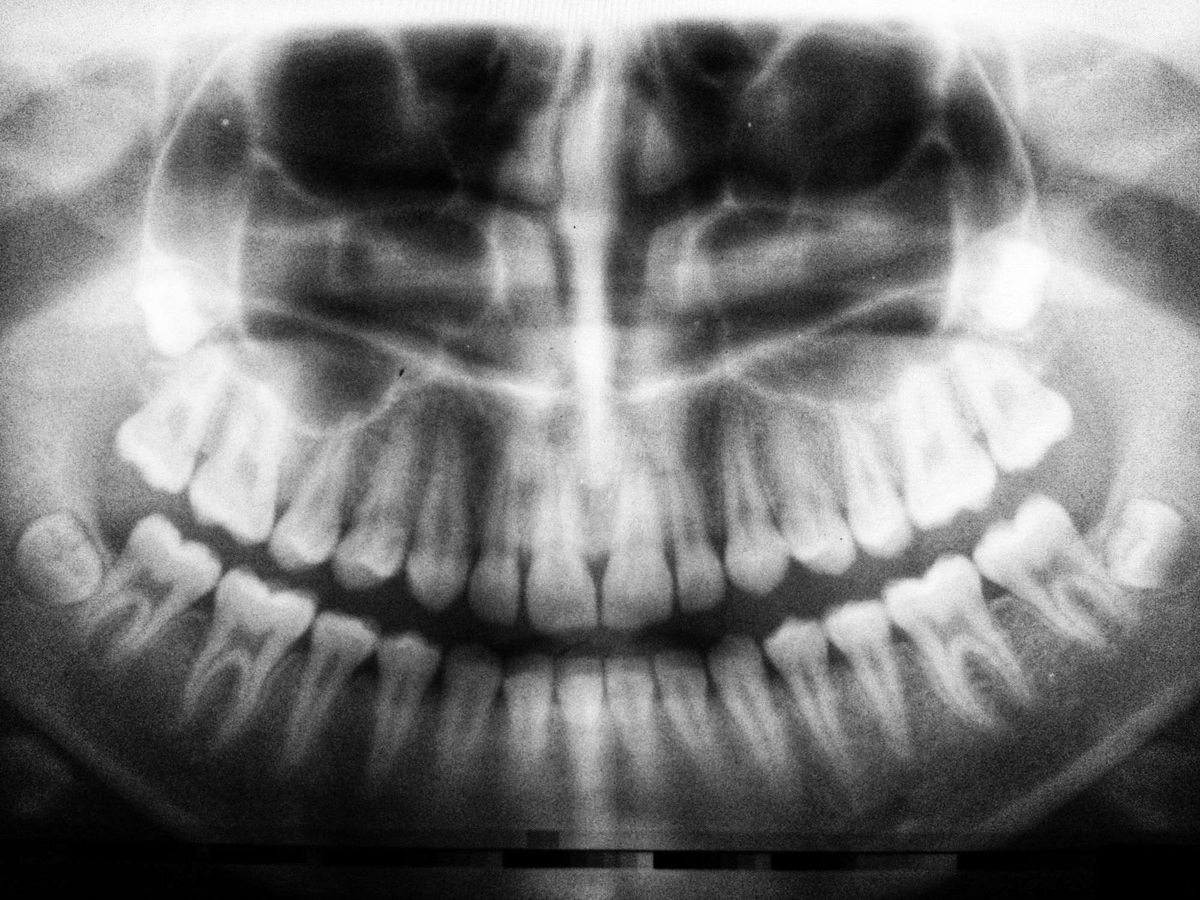
See it, before you decide on it.
See before you decide
We show you your own scan or imaging on screen, so treatment planning is a shared conversation, not something done behind closed doors.
Only when it's useful
3D imaging isn't used as standard for every visit — only when it genuinely adds something to planning your treatment.
Less time, less fuss
No more long waits for putty to set — most scans take a few minutes and can be reviewed with you immediately.
The things people usually ask.
Curious to see your own scan?
Ask about digital scanning or 3D imaging at your next visit, or book a consultation if you're planning a treatment that might need one.
Book a consultation (03) 8358 2565Caroline Springs Clinic
Information on this page is general in nature. Whether a scan or 3D imaging is appropriate depends on your individual treatment — we'll confirm what's needed for you before proceeding.





 Major health funds
Let's take a proper look first.
Whether you're weighing up aligners, an implant, or simply want to see your own teeth on screen, a short consultation is the place to start.